Showing posts with label coming-of-age. Show all posts

Tuesday, November 1, 2022

THE Q and My Inspiration


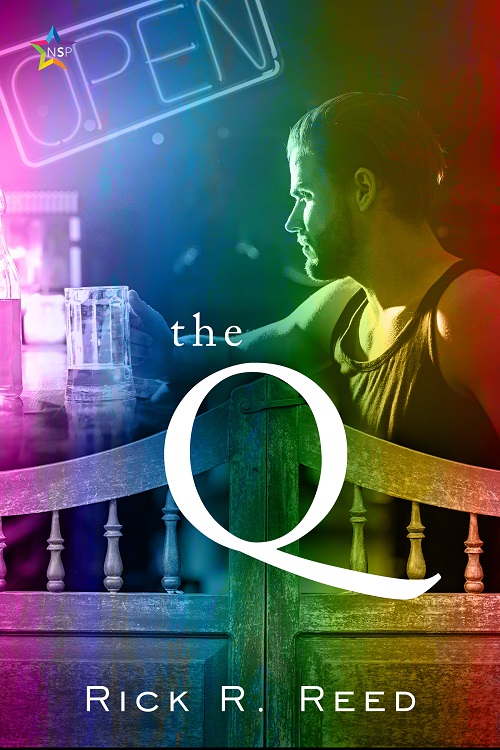
 The Q
is one of the books I'm most proud of. It also has the distinction of being the hardest to classify.

It chronicles one night at a small town gay bar in the foothills of the Appalachians (which is where I grew up) where all the locals gather. Through the course of one revelatory night, a memorable cast of characters come forward to share their stories—there’s heartbreak, missed connections, falling in love, falling out of love, making tough decisions, the exposure of secrets…and a lot more. 

There are a few books that inspired my desire to tell a story through individual glimpses into different lives over the course of one pivotal night. Spoon River Anthology, Winesburg, Ohio, and the Elizabeth Strout books, Olive Kitteridge and Olive, Again. All of these books basically weave short stories together to create a novel. I loved that idea and have had it in the back of my head for a while.

On a visit to my hometown, which is on the Ohio River and in the Appalachian foothills, I went with my sister one night to a dance club and casino in West Virginia. To draw people in to use the casino, the place has a live band for dancing every Saturday night and I watched all the regulars who come to dance and socialize and thought how they each have a story. And therein my idea for The Q was born. 

ABOUT THE BOOK


Step out for a Saturday night at The Q—the small town gay bar in Appalachia where the locals congregate. Whose secret love is revealed? What long-term relationship comes to a crossroad? What revelations come to light? The DJ mixes a soundtrack to inspire dancing, drinking, singing, and falling in (or out) of love.

This pivotal Saturday night at The Q is one its regulars will never forget. Lives irrevocably change. Laugh, shed a tear, and root for folks you’ll come to love and remember long after the last page.

BUY THE Q

Nine Star Press

Amazon Kindle 

Amazon Paperback 

Saturday, September 10, 2022

THE Q and Inspiration


 The Q
is one of the books I'm most proud of. It also has the distinction of being the hardest to classify.

It chronicles one night at a small town gay bar in the foothills of the Appalachians (which is where I grew up) where all the locals gather. Through the course of one revelatory night, a memorable cast of characters come forward to share their stories—there’s heartbreak, missed connections, falling in love, falling out of love, making tough decisions, the exposure of secrets…and a lot more. 

There are a few books that inspired my desire to tell a story through individual glimpses into different lives over the course of one pivotal night. Spoon River Anthology, Winesburg, Ohio, and the Elizabeth Strout books, Olive Kitteridge and Olive, Again. All of these books basically weave short stories together to create a novel. I loved that idea and have had it in the back of my head for a while.

On a visit to my hometown, which is on the Ohio River and in the Appalachian foothills, I went with my sister one night to a dance club and casino in West Virginia. To draw people in to use the casino, the place has a live band for dancing every Saturday night and I watched all the regulars who come to dance and socialize and thought how they each have a story.

And therein my idea for The Q was born. 

ABOUT THE BOOK


Step out for a Saturday night at The Q—the small town gay bar in Appalachia where the locals congregate. Whose secret love is revealed? What long-term relationship comes to a crossroad? What revelations come to light? The DJ mixes a soundtrack to inspire dancing, drinking, singing, and falling in (or out) of love.

This pivotal Saturday night at The Q is one its regulars will never forget. Lives irrevocably change. Laugh, shed a tear, and root for folks you’ll come to love and remember long after the last page.

BUY THE Q

Nine Star Press

Amazon Kindle 

Amazon Paperback 

Wednesday, June 29, 2022

New and Notable: PARASITE by Ridley Harker


Genre: Horror, LGBTQIA+, Action/adventure, coming-of-age, dark, humorous

Add to Goodreads


About the Book

Seventeen-year-old Jack Ives is used to being unlucky. His only friend has just moved away to college, his parents are alcoholics, and he’s relentlessly bullied by the town psychopath. All that begins to change with the arrival of a handsome but quirky new student, Lucien, who wants to be more than friends.

Their newfound happiness doesn’t last, however, as a strange new illness strikes the island. Fishermen go missing, and the villagers left behind aren’t themselves anymore. When Lucien is suspected to be the cause of the outbreak, can Jack overcome his teenage hormones and save Eldrick Isle? Will he even want to?

Excerpt

Parasite
Ridley Harker © 2022
All Rights Reserved

0054 hours

September 2, 2015

Gulf of Maine

When some kooky mainlanders offered to pay extra for a midnight ferry, Bill Jamison had jumped at the chance to pay off his bar tab. Now he regretted it. The middle-aged fisherman leaned morosely against the starboard rail while beside him his business partner, Jim Kendrick, fought the uphill battle of smoking a pipe during a storm. The rain pounded against the deck in a dull roar and, judging from Kendrick’s cursing, the pipe had gone out once again.

Not for the first time, Jamison reluctantly noted that his partner was getting on in years. Kendrick’s coat hung from his wizened frame like a cloak. His mysterious weight loss had made them both nervous, not that either one said anything. For an Eldrick Islander, the prospect of cancer was like foul weather; something to be endured without complaint.

“Goddamned son-of-a—” Kendrick upended the pipe and a sodden wad of tobacco fell onto the deck. He kicked it away, smearing it across the boards.

“We shouldn’t have gone out tonight,” Jamison said.

“Horse shit,” Kendrick huffed. “We’ve sailed through worse than this.”

“That ain’t what I meant.” Jamison jerked his head toward the mainlander lurking near the bow of the ferry.

Tall and blond, his passenger’s washed-out appearance resembled a photograph, the kind found in a neglected attic of subjects long deceased. Judging by the young man’s pinched frown, Jamison assumed that Silas Spencer was either a lawyer or an undertaker. He shuddered; Jamison hated lawyers, having seen enough of their kind during his divorce. Blood-sucking monsters the lot of them, in his opinion, but he had never been afraid of them, not even when the wretches helped his ex-wife take half of everything he’d owned.

But he was afraid of this one.

It was the eyes. He had seen eyes like that once before, years ago. Back when he had spent much of his days drunk. Once, while Kendrick cleaned their catch, Jamison had gone too far and drunk too much. His legs had betrayed him, and he had tumbled over the side. He remembered tasting blood. A tangy mix of iron and salt that burned his lungs when he tried to inhale. His eyes had stung. He had floundered in the icy water. He, a man who had learned to swim before he could walk, was drowning.

Then the moment of panic was gone, and instinct had set in. Jamison’s powerful legs had propelled him upwards, his arms outstretched toward the boat. He had nearly reached it before the shadow was beneath him. It came at him like a torpedo, almost too fast for his gin-addled brain to comprehend. A massive, prehistoric monster armed with muscled jaws and sandpaper skin. The soulless black pits of its eyes rolled back in its head, and its gaping maw expanded to reveal rows upon row of serrated teeth.

In the split second before the attack, Jamison had stared into the darkness of oblivion—then he had been shaken like a terrier on a rat. The shark had separated the flesh from his leg and sentenced him to a month in a mainland hospital whose bill he was still struggling to pay off. The very existence of such a creature disproved the notion that humans sat at the top of the food chain.

Safely back in the present, Jamison shuddered and remembered to breathe. He rubbed at his forearms, warm beneath his thick woolen sweater. He had been lucky. If he had drunk a little more gin, perhaps he wouldn’t have had the presence of mind to sink his knife deep into the shark’s eye socket. Now only scars and nightmares remained, and he hadn’t touched the bottle since. He liked to say that his rock bottom was on the ocean floor.

Jamison recognized something of that great white shark in Spencer. The man’s flat, grey eyes made his skin crawl. He glowered at Spencer’s broad-shouldered back, but Spencer didn’t seem to notice or care. His attention lay on the swirling mists beyond the ferry’s bow. Typical yuppie mainlander. Pretentious bastard, Jamison thought.

“They’re up to something,” he said aloud, glancing toward the cabin where the other one had sequestered himself.

Kendrick only snorted. “They’re mainlanders. They’ll spend a few weeks on the Isle, get bored, and then go back to whatever hell hole they came from. You know the type. We get a few every other year or so.”

Jamison did know the type. Unlike Nantucket, or Martha’s Vineyard, Eldrick Isle never attracted the summer crowd. There was nothing to offer. The once booming fishing industry had been usurped by commercial trawlers decades ago, forcing the neighboring isles to turn to seaweed farming instead. Eldrick, however, chose to bow its head and soldier on, clinging to the memory of its glory days. Billboards advertised a hotel that had long since shuttered its doors. The lone diner had a Visitor’s Special that no one ever ordered. The pier greeting the newcomers reeked of dead fish, the ever-present stench emanating from the dozen or so rusted fishing boats docked in the harbor.

Then there was the island itself: Eldrick’s shores were steep, rocky cliffs, with edges sharp and jagged like broken teeth. The surf stirred up debris and rotting vegetation, littering the island’s few beaches with trash from the abandoned canning factory on the island’s east side. Even the hottest days of summer were damp and chilly. Mist obscured the frigid waters. It crept onto the island, soaking through the sturdiest of coats. The few vacationers that showed up in August inevitably took one look at the dying town and turned around to book their return ticket.

Rain splattered against Jamison’s hood, echoing in his ears. Kendrick tried his pipe again to no avail. The storm lulled enough that the sound of retching was audible from within the depths of the cabin. Rasping coughs followed by the wet splatter of vomit. The downpour returned with a roar. It slipped past Jamison’s hood, soaking his neck. His shiver had nothing to do with the cold.

Kendrick abandoned his pipe and frowned, his rheumy eyes searching Jamison’s face. Jamison cleared his throat, striving to be heard over the rain and yet not loud enough for Spencer to hear. “Something’s wrong,” he shouted into Kendrick’s ear. “We were barely on the water before the kid got sick—”

“Billy, you been drinking again?” Kendrick asked, clasping Jamison’s shoulder with gnarled fingers. “When’d you get so goddamned superstitious?”

“No, I haven’t been fucking drinking! I’m only saying that this whole thing feels wrong; if one of my brothers were puking like that, I’d at least go check on him. I think the kid’s got something bad—what if it’s contagious?”

“What, like ee-bolah?” Kendrick asked, with a sharp look toward the ferry’s cabin. “Naw, it couldn’t be…”

“You checked on him?”

“No.”

“Well, someone ought to,” Jamison said.

“You do it,” Kendrick said dubiously. “Last time, I slipped in it and damn near broke my back.”

“Go check it out. If he’s only seasick then I’ll clean it up myself, but I’m telling you, something’s very wrong with that kid.”

“Christ, Billy! Nag anymore and you’re gonna sound like my wife.” Kendrick gave him a shove and then marched across the deck toward the cabin. Jamison caught movement in the corner of his eye and found Spencer watching them, his back against the railing. Their eyes met, and all of a sudden Jamison couldn’t hear the storm. There was nothing but the blood pounding in his ears. One corner of Spencer’s thin mouth twitched upward into a razor’s edge of a smirk. Jamison’s skin crawled. He wrenched his eyes away.

“Jim, wait!” Jamison shouted over the rain, but Kendrick had already knocked on the cabin door. The old sailor reached for the handle, his calloused fingers closing in on the doorknob. Jamison sucked in his breath.

Kendrick half turned around, his shoulders squared and his lips pursed, eyes narrowed beneath his bushy white brows. His hand was still on the cabin door. “Jesus Christ, Billy, what now?” he demanded. “What in the hell’s wrong with you, you crazy son of a bitch? You’re shaking like a virgin on—” He paused and glanced down. Jamison didn’t know why until Kendrick tried to take a step back. His boot remained glued to the floor.

Kendrick shoved at the door and yanked at his shoe. He stumbled as it came loose, trailing a viscous black gel behind it. More of the substance pooled out from underneath the cabin door. Lightning flashed, and a rainbow sheen coated the surface of the muck. The door creaked open.

Before Jamison shouted in warning, something darted out from the gloom. Thick and ropy, like a bundle of rotten vines, it hit Kendrick’s wrist with a wet slap, latching onto his bare skin. Kendrick sputtered, his eyes wide and his mouth hanging open in a perfect caricature of surprise—then another tentacled limb emerged and shoved itself down his gullet. Like a fish on a hook, he was yanked into the cabin.

Purchase

NineStar Press | Books2Read

Meet the Author

Ridley Harker is an up-and-coming horror author who delights in all things gay and spooky. While past careers have included reptile keeping at a zoo and EMT work at a casino, writing is his true passion. His favorite books are those with enemies to lovers, small town settings, and great villains. He currently lives in the Middle of Nowhere with his two dogs, a grumpy old snake, and a host of pet tarantulas.

Website | Facebook | Twitter | Patreon

Giveaway

a Rafflecopter giveaway

  Blog Button 2

Tuesday, January 4, 2022

What Inspired Me to Write THE Q


 The Q
is one of the books I'm most proud of. It also has the distinction of being the hardest to classify.

It chronicles one night at a small town gay bar in the foothills of the Appalachians (which is where I grew up) where all the locals gather. Through the course of one revelatory night, a memorable cast of characters come forward to share their stories—there’s heartbreak, missed connections, falling in love, falling out of love, making tough decisions, the exposure of secrets…and a lot more. 

There are a few books that inspired my desire to tell a story through individual glimpses into different lives over the course of one pivotal night. Spoon River Anthology, Winesburg, Ohio, and the Elizabeth Strout books, Olive Kitteridge and Olive, Again. All of these books basically weave short stories together to create a novel. I loved that idea and have had it in the back of my head for a while.

On a visit to my hometown, which is on the Ohio River and in the Appalachian foothills, I went with my sister one night to a dance club and casino in West Virginia. To draw people in to use the casino, the place has a live band for dancing every Saturday night and I watched all the regulars who come to dance and socialize and thought how they each have a story. And therein my idea for The Q was born. 

ABOUT THE BOOK


Step out for a Saturday night at The Q—the small town gay bar in Appalachia where the locals congregate. Whose secret love is revealed? What long-term relationship comes to a crossroad? What revelations come to light? The DJ mixes a soundtrack to inspire dancing, drinking, singing, and falling in (or out) of love.

This pivotal Saturday night at The Q is one its regulars will never forget. Lives irrevocably change. Laugh, shed a tear, and root for folks you’ll come to love and remember long after the last page.

BUY THE Q

Nine Star Press

Amazon Kindle 

Amazon Paperback 

Friday, December 3, 2021

New and Notable: Turnabout by Laury Egan


Title: Turnabout

Author: Laury A. Egan

Publisher: NineStar Press

Release Date: 11/30/2021

Heat Level: 3 - Some Sex

Pairing: Female/Female

Length: 78500

Genre: Historical (20th Century), LGBTQIA+, teenage romance, lesbian, lesbian love, sailing, PTSD, Vietnam War, 1960s, first love, mother-daughter relationships, young writers, class differences, New Jersey, coming-of-age

Add to Goodreads


Description

The summer of 1964. Four teenage lives intertwine as each searches for love, identity, and a passage through painful family conflicts, social isolation, and the confusion of sexual orientation.

During a sailing class, four teenagers meet.

Jessie Schaffer is fourteen, an intelligent and solitary girl, who dreams of becoming a writer. When she sees nineteen-year-old Lindsay Ames, the instructor, standing on a dock, sunlight illuminating her blond hair and blue eyes, Jessie falls in love but is too afraid of her feelings and what they mean.

In an attempt to reassure herself she is “normal,” Jessie becomes involved with two boys in the class: Kenny Crenshaw, also fourteen, a darkly handsome and flirtatious guy, and Calvin Brayburn, a year younger, who will be in their freshman class because he’s academically brilliant.

On the first day of sailing, Cal is smitten with Jessie, though he is hindered by shyness. As the romantic relationships take unexpected twists, Jessie, Lindsay, Calvin, and Kenny relate their individual stories, their hopes, fears, and longings, all the while being buffeted by intense pressures.

Set in coastal New Jersey, the plot roams from its beautiful rivers to lush scenes in St. Thomas and Vietnam’s jungles during the war.

Excerpt

Turnabout
Laury A. Egan © 2021
All Rights Reserved

Jessie
“I’m not going!” I state this as a firm fact; my mother hears acquiescence.

“And wear your new clam diggers and that boat-neck shirt I bought you.”

“No! I feel like an idiot in those clothes!”

My mother, who dresses perfectly for every occasion, arches an eyebrow, one that took hours to sculpt. “You are attending sailing class, and I want you to look nice. We will hear no more about it, Jessie.”

When the singular “I” migrates into the royal “we,” my goose is cooked.

“I will see you in the car. Ten minutes,” she says.

After she leaves the room, I go to the closet, slip the fake nautical clothes off hangers, and throw them on the bed where I slump beside them. “I’ll look like a fool,” I mutter as I stare at the blue-and-white-striped shirt and the white clam diggers decorated with red piping and baby sailboats. I shut my eyes in frustration and follow imperial orders.

«

I’m standing by the entrance to the Lenape Sailing and Yacht Club, hoping my mother will reconsider and take me home. I turn to plead with her, but she’s already backing the big black T-Bird out of the drive, its whitewalls spitting sand four feet past its chugging tailpipe. For a minute, I picture the car getting stuck but no luck. It’s me who’s stuck.

I scan the sky and beach. The morning sun has taken a hike, leaving a mash of clouds in its wake. The breeze sucks the tops off the cattails and raises goosebumps on my arms and the whitecaps on the river. With no real alternative, I walk through the clubhouse’s double doors, wishing I could fly out the other side, shoot off the dock, and do a Superman back home.

Inside, it smells like salt air, tired sun, and dried old wood. About ten kids—probably my class—are milling around looking self-conscious. Even though they appear nervous, my years of experience tell me they’ll do just fine, once the preliminary jitters smooth off, while I will not. Oh, sure, I can pick up the sailing stuff, but the rest? I stand by the window, thinking I don’t like groups because groups don’t like me.

“Hi.”

I turn. A boy with thick glasses is staring at me with a curious expression. His hazel eyes, magnified by the lenses, appear intelligent. He has small cuppy ears, an epidemic of brown freckles across his face and arms, and bright-red hair cut in straight bangs and parted unevenly on the left side of his square head. The boy is a little hunched, as if he’s already apologizing for future tallness. Despite his neat green shirt and navy cotton shorts, he doesn’t wear his body comfortably. The kid looks as ill at ease as I feel.

“Hi,” I reply, though I’m lukewarm in interest. I look over the group, hoping there is someone better to hitch up with. Most of the kids are about my age. Next week, on July 5, I’m turning fourteen.

“My name’s Calvin Brayburn.”

Calvin seems younger. Perhaps twelve nudging thirteen and oblivious to the huge barrier a year’s difference makes.

“Mine’s Jessie.”

“Jessie what?” He tilts his head and squints a little, as if his poor eyesight dulls his hearing.

“Jessie Schaffer.” I’m not a chatty type, particularly with strangers, which includes just about everyone I’ve ever met. How can I lose this kid? Should I play it high and mighty or chilly-neutral? Then, the teacher enters from a side room, saving me the decision.

“Hello, everyone. I’m Lindsay Ames, your sailing instructor.”

Lindsay is tall, or at least she is from my five-foot-four perspective. Short blond curly hair. Blue eyes. Long arms and legs already tan from being outside. Can’t tell if she is a senior going to be a freshman or a freshman home from college. Probably four or five years older than I am. I breathe easier. I’m more comfortable around adults.

Lindsay hands out mimeographed papers. “The parts of a sailboat and two pages of nautical knots,” she explains. “Don’t worry—we’ll go over them, but you’ll have to memorize the parts and how to tie a bowline and a cleat hitch by next week.”

One of the girls giggles and nudges her neighbor. I don’t see anything funny about knots, but maybe that’s because I’ve already taught myself a few—Dad said this would be expected.

“It’s too windy to go out today,” Lindsay continues, “so we’ll get acquainted and learn some of the basics.”

She takes a seat in a wooden armchair, and everyone sprawls onto couches and chairs around her as if she’s going to tell us a story. I sit on the floor opposite and stare at the blue Keds’ stamps on the back of my white sneakers.

“Let’s go around the room.” She nods to a girl with a ponytail. “What’s your name?”

When the kid smiles, silver braces glint like chrome on a Chrysler grille. “Melinda Whitmore,” Ponytail replies. “Hi!” She jerks her hand in the air and gives half a wave. She’s growing boobs that overwhelmed her training bra a long while ago.

“Hi, Melinda,” Lindsay replies. “Welcome aboard.”

I’m not positive I like this sailor heartiness, but so far, Lindsay seems okay. She then points to a guy with black, wavy hair and dark Romeo eyes.

“Hey,” he says in a false sheepish tone. “I’m Kenny Crenshaw.”

Melinda and the other girls exchange blushing glances. Kenny is instantly crowned “king” without any contest. I’m no slouch at rating pecking orders in social gatherings. Of course, none of the girls look at me for confirmation, a fact I also file away in my mental account ledger.

As if he senses his royal anointment, Kenny squares up his shoulders and drops his voice. “I already know how to sail,” he explains. “My dad has a boat.”

“Oh? What kind?” Lindsay asks.

Kenny Crenshaw smiles, confidence spreading across his face. “It’s a thirty-two-foot O’Day.”

“Nice boat,” the instructor says, smiling. “So, you must be quite accomplished.”

He stares at his feet and shrugs, as if he’s embarrassed. In that moment, my dislike of him rushes in like a squall.

“Yes, I am,” he answers. “Sort of.”

The “sort of” is another attempt to appear modest, though it doesn’t wash with me. His smug perfection stings like a pissed-off wasp. We’ll see who the better sailor is. I don’t have a clue why I’m feeling so competitive.

Melinda’s friends are Janey and Gretchen. The three of them are jump-rope types. That’s how I used to classify the popular girls in elementary school. I never mastered their games—skipping rope or their other activity—flirting—and still nourish a fine disdain for both. Sure, back then, the girls let me play sometimes, so I wasn’t on the outer orbit of Pluto, but I wasn’t really accepted, which is typical of the flip-flop nature of my life. Graduation from eighth grade didn’t improve my standing with boys either, and neither did the spring dance, a perfect ten on the misery scale. My mother tortured me into going solo and wearing an itchy chiffon dress and patent leather shoes that pinched. I was the weed amid the wallflowers and didn’t dance once. I’m glad we just moved to Bingham, where I’ll attend high school and hopefully make some friends.

There are four more students who introduce themselves: Steve, Cathy, Mary Lou, and Gene. The girls all cross their arms over their chests, protecting their budding growths, and the boys look careless and bored, like they’d just as soon be throwing rocks at beach rats. Everyone is sort of average looking compared to Kenny and Melinda, who, despite her dental work and giggles, has drawn the longest glances from the boys. Calvin is saving me from last place on the unpopularity register. When it’s my turn to say hello, I’m tempted to tell everyone my father has a sixty-nine-foot sailboat, just to see how it goes down. But one of my rules is that I only lie when I’m sure no one will catch on. Because I don’t know who makes boats that size, the last thing I want is King Kenny announcing there is no such thing. So, after giving my name, I clam up, ceding round one to him. At least Lindsay gives me a warm smile, but she smiles at all the kids.

After that, we go outside and investigate a Turnabout, a little ten-foot catboat we’re using for our lessons. Lindsay gives us the port/starboard/stern/bow info, shows us how to tell which way the wind is blowing by the little pink ribbon fluttering near the top of the mast, and demonstrates how to attach and hoist the single sail. The whole time she does this, my new friend Calvin sticks to my side tighter than a tick. Whenever I look at him, he grins like we’re already buddies. Melinda and Kenny aren’t listening to Lindsay because they’re whispering and digging elbows into each other.

Two hours later, when my mother arrives, I announce I don’t want to take sailing lessons anymore. She doesn’t listen.

Purchase

NineStar Press | Books2Read

Meet the Author

Laury A. Egan is the author of the YA novel, The Outcast Oracle; three suspense novels, Jenny Kidd, A Bittersweet Tale, and The Ungodly Hour; a comedy, Fabulous! An Opera Buffa; a collection, Fog and Other Stories; and a literary work, The Swimmer. Four limited-edition poetry volumes have been published: Snow, Shadows, a Stranger; Beneath the Lion’s Paw; The Sea & Beyond; and Presence & Absence. She lives on the northern coast of New Jersey where she sailed Turnabouts during her teenage years.

Website | Facebook | Twitter

Giveaway

a Rafflecopter giveaway

  Blog Button 2

Wednesday, June 16, 2021

Inspiration and THE Q


 The Q
is one of the books I'm most proud of. It also has the distinction of being the hardest to classify.

It chronicles one night at a small town gay bar in the foothills of the Appalachians (which is where I grew up) where all the locals gather. Through the course of one revelatory night, a memorable cast of characters come forward to share their stories—there’s heartbreak, missed connections, falling in love, falling out of love, making tough decisions, the exposure of secrets…and a lot more. 

There are a few books that inspired my desire to tell a story through individual glimpses into different lives over the course of one pivotal night. Spoon River Anthology, Winesburg, Ohio, and the Elizabeth Strout books, Olive Kitteridge and Olive, Again. All of these books basically weave short stories together to create a novel. I loved that idea and have had it in the back of my head for a while.

On a visit to my hometown, which is on the Ohio River and in the Appalachian foothills, I went with my sister one night to a dance club and casino in West Virginia. To draw people in to use the casino, the place has a live band for dancing every Saturday night and I watched all the regulars who come to dance and socialize and thought how they each have a story. And therein my idea for The Q was born. 

ABOUT THE BOOK


Step out for a Saturday night at The Q—the small town gay bar in Appalachia where the locals congregate. Whose secret love is revealed? What long-term relationship comes to a crossroad? What revelations come to light? The DJ mixes a soundtrack to inspire dancing, drinking, singing, and falling in (or out) of love.

This pivotal Saturday night at The Q is one its regulars will never forget. Lives irrevocably change. Laugh, shed a tear, and root for folks you’ll come to love and remember long after the last page.

BUY THE Q

Nine Star Press

Amazon Kindle 

Amazon Paperback 

Tuesday, June 15, 2021

NEW AND NOTABLE: The Mayor of Oak Street by Vincent Meis


Title: The Mayor of Oak Street

Author: Vincent Traughber Meis

Publisher: NineStar Press

Release Date: 06/14/2021

Heat Level: 2 - Fade to Black Sex

Pairing: Male/Male

Length: 88400

Genre: Contemporary, LGBTQIA+, age-gap, coming-of-age, coming out, college, political, friends to lovers, period piece, reunited

Add to Goodreads


Description

In the 1960s, Midwestern boy and Boy Scout, Nathan delivers newspapers and mows lawns. Nathan uses his cover to move about yards and sneak into the homes of his neighbors, uncovering their secrets.

In high school, one of the local misfits introduces him to diet pills, which help him overcome his shyness. In an amphetamine high, he meets Cindy, who he hopes will steer him along the “morally straight” path of the Boy Scout Oath he swore to.

Nathan is infatuated with a young doctor down the street, Nicholas (Dr. B), who embodies all the things his mother would love him to be. On one of his secret forays in Dr. B’s house, he hides in a closet and witnesses his idol having sex with man while the wife is out of town. Dr. B’s affair leads to tragedy, forcing the doctor to leave town.
At college in New Orleans, Nathan meets a group of rebels and expands his drug use. Marc, a bisexual Cajun charmer becomes Nathan’s first male sexual experience, but promptly leaves town.

Nathan has a chance encounter with Dr. B, who has moved to New Orleans. Dr. B is in a relationship, but still closeted. Frustrated by Dr. B’s cool reaction, Nathan goes on a six-month binge of amphetamines and anonymous sex. On one night of debauchery, he overdoses and ends up in the emergency ward.

Nathan’s near death rallies Dr. B and Nathan’s other friends to force him into rehab. On the way home from work, Nathan witnesses the gruesome aftermath of the 1973 Up Stairs Lounge fire that devastated the gay population of New Orleans. As a result of the fire, Dr. B’s live-in boyfriend leaves town, freeing Dr. B to explore his feelings for Nathan.

Excerpt

The Mayor of Oak Street
Vincent Traughber Meis © 2021
All Rights Reserved

The Sangamon flows muddy and rank through the corn and soybean fields of central Illinois, giving its name to my city and the lake it fills on the south side before continuing its meander west. One of its tributaries, the even lazier and muddier Harold’s Creek, ran practically up to my back door in its own journey through the woods behind the homes on Oak Street.

The afternoon sun filtered through the tall trees, warming my shoulders as I walked along the creek, imagining building a raft like I had seen my brother and his friends do a few years before. I would ride it down the creek to the Sangamon and into the Illinois, eventually reaching the Mississippi. The Mississippi would take me to New Orleans, a city memorialized in song, literature, and film as a place of wonder. It wasn’t that I needed to run away like Huckleberry Finn. I hadn’t yet learned to hate everything the Sangamon gave its name to. It was a boy’s fantasy brought on by the heat of summer and the mesmerizingly sluggish flow of water.

I heard a branch snap deep in the woods. I often saw hobos from the nearby Wabash Line wandering in the woods, and my mother told me I needed to avoid them, but I sometimes watched them from behind a clump of bushes. My eyes darted around the area and saw nothing. I glanced at my watch. Time to go. For most kids, these were the carefree days of summer, but I had things to do. From the creek, I walked up the hill, through our backyard, and out to the street.

Mrs. Sloan’s heavy oak door hung wide open while a screen kept the swarms of late summer flies and mosquitoes at bay. I put my face to the mesh in what felt like an invasion of her privacy, causing me to tingle from the top of my head down to my big toes.

“Hello? Mrs. Sloan?” I shouted into the dim interior of the hall.

No answer.

I opened the screen door haltingly and stepped inside. The door creaked shut, sounding painful in the silence of the house. I took a step, and then another. My legs shook. I peered to the right into the living room and left into the dining room. A force had taken control of me and pushed me on, my sneakers barely touching the carpet.

I went as far as the kitchen, passing two empty bedrooms on the way. Her purse sat on the yellow chrome Formica kitchen table, the keys to her Oldsmobile right next to it. Out the kitchen window, I searched for her floppy straw hat in the sunny backyard. She was neither in the garden where she often tended her vegetables nor in the lawn chair where she sometimes sat, large sunglasses on her nose and a cocktail in hand. I took note the lawn needed mowing.

Nylons hung over the bathroom shower curtain rod, hypnotically swaying in the breeze from the open window. Though we called her Mrs. Sloan, I had never heard of a Mr. Sloan. My father once complained about entering the bathroom and finding my mother’s nylons drying in plain sight. I wondered if Mrs. Sloan was sad living alone or happy she had the freedom to do what she wanted.

I should have been scared of her coming home and finding me lurking in her house, but a stronger force blocked the fear, a compelling energy moving my mind and body, making me feel impervious to danger. I continued down the hall to the living room, stopping to gaze at each of three framed needlepoint messages: “There’s nothing to fear but fear itself,” “A cheery smile makes life worthwhile,” and “You belong among the wildflowers.”

I had come to Mrs. Sloan’s door in my rounds, collecting for my paper route. She was a month behind in her payments. And I rationalized my invasion of her home out of concern for her welfare. My mother once said she wouldn’t be surprised to find her passed out drunk on the front lawn one day. My brother in high school sometimes came home from a night of drinking with his buddies and would collapse face down on his bed in our shared room without removing his clothes or shoes. One time, he ended up on the floor. Perhaps Mrs. Sloan had fallen like my brother. Perhaps she had fallen asleep in the bath and was at risk of drowning like I had seen on a television program.

I spent a few more minutes in the house before exiting through the front door into the calm and quiet on Oak Street. I continued up the block to do the rest of the collections. That night I drew a floor plan of her home, noting doors and windows. My brother called me a weirdo when the first thing I looked at in the Sunday paper was the page with the floor plan of a new house on the market while he went for the sports section, my father the news, and my mother the book reviews. I also scribbled notes about Mrs. Sloan’s house: the color and shape of her purse, the black-and-white photo of a somber older couple in the living room, the buff-colored nylons, the approximately twelve-inch cross hanging over her bed, and the needlepoint messages.

Before I entered my teenage years, I would know my way in and out of most every house on the block without being discovered. It was the Midwest. It was the ‘60s. Crime happened elsewhere. In addition to delivering papers, I mowed lawns. I could cross barriers, move within fences, and befriend dogs. Access. Getting inside the house was usually the easy part.

Everybody told me my paper route and lawn-mowing jobs would be good experience though I had no idea how much I would learn about myself, about others, about life, the good and the bad. I could assume the face of the upstanding neighborhood boy, appearing at their doors to collect subscription payments, smiling and making small talk while below the surface I was another person, motivated by desires they would never understand.

The second time I entered a home was as spontaneous as the first. It was the Pruitts’. While mowing the front lawn, I noticed Mrs. Pruitt lock the front door, take her two identically dressed little girls by the hand, jump into their Ford station wagon, and drive off. When I got around to the back of the house, I spotted the kitchen door standing open, beckoning me. I turned off the mower so I would hear if the car returned. I went into the kitchen. My mother would die rather than let our kitchen fall into such disorder; the sink filled with dirty dishes, and the kitchen table covered with open schoolbooks and scattered papers.

A half-full milk carton sat on the counter. I opened the fridge and saw a whole shelf of soda pop. I took an orange Crush and drank it as I did a quick tour of the house. Not much interesting. The rest of the house was as messy as the kitchen. I finished the soda outside, threw the bottle in the trashcan, and finished mowing the lawn. Before I went to bed that night, I drew a floor plan of their three-bedroom and put it in a folder with Mrs. Sloan’s.

I thought of these intrusions as accidents, isolated incidents that wouldn’t be repeated. But images of those escapades kept dancing through my head, enticing me to do it again. The rush of danger, the real possibility I might be caught, was like a drug. At the time I was still ignorant about drugs and addictions, but my body clearly knew sensations it wanted to revisit. I managed to stave off my urges for a few months. I turned twelve over the summer, and several of my customers who had heard it was my birthday tacked on a bit extra to their payments.

Lawn-mowing season came to an end as the weather turned cold, and we had our first snowfall. Soon after, I started receiving calls about paper holds for the Thanksgiving holidays. To me, they might as well have been invitations. I prayed it didn’t snow as the soft whiteness would show the hard dirty prints of my boots, a trail of my activities. I had to start thinking about such things: tracks I might leave, who in the neighborhood tended to snoop out their windows, or how often people left doors unlocked, windows open.

I made a point of being friendly with the dogs on my street as I knew my extracurricular activities at houses with animals could be a problem. The Jackmans had a golden retriever. I’d received notice to put their paper on hold for five days, making me guess they weren’t going to leave the dog in the house for that length of time.

When I did my collections the week before Thanksgiving, I casually mentioned to Mrs. Jackman that I had received the hold notice. People loved to give out information they didn’t have to. She revealed they were going to their lake house in Arkansas. Butch was curled up at her feet. He raised his head as she took a ten out of her wallet and gave it to me. She told me to keep the change, and I thanked her profusely while I tore off her receipt.

I reached down to pet the dog. “I guess Butch is going to get a vacation too.”

“Oh, yeah. He loves it down there.”

Bingo, I was in. After our Thanksgiving meal, Dad and my brother watched the football game on TV while Mom cleaned up. I went to my room, saying I was going to read. Nobody thought it was odd. In my family, everybody did pretty much what he or she wanted. Normally, after a Thanksgiving meal, Dad and my brother passed out in front of the TV, and Mom curled up in a chair to read after cleaning up the kitchen. They had all had a lot of wine at dinner, including David, who my parents allowed to drink though he was only sixteen, something about him learning to drink responsibly at home keeping him from being irresponsible when he went out. I wasn’t sure that was working.

Purchase

NineStar Press | Books2Read

Meet the Author

Vincent Traughber Meis started writing plays as a child in the Midwest and cajoled his sisters to act in performing them for neighbors. In high school, one of his short stories won a local contest sponsored by the newspaper. After graduating from college, he worked on a number of short stories and began his first novel. In the 1980’s and 90’s he published a number of pieces, mostly travel articles in publications such as, The Advocate, LA Weekly, In Style, and Our World. His travels have inspired his five novels, all set at least partially in foreign countries: Eddie’s Desert Rose (2011), Tio Jorge (2012), and Down in Cuba (2013), Deluge (2016) and Four Calling Burds (2019). Tio Jorge received a Rainbow Award in the category of Bisexual Fiction in 2012. Down in Cuba received two Rainbow Awards in 2013. Recently stories have been published in three collections: WITH:New Gay Fiction, Best Gay Erotica Vol 1 and Best Gay Erotica Vol 4. He lives in San Leandro, CA with his husband.

Website | Facebook | Twitter | Instagram

Giveaway

a Rafflecopter giveaway

  Blog Button 2

Monday, February 15, 2021

What Inspired Me to Write THE Q


 The Q
is one of the books I'm most proud of. It also has the distinction of being the hardest to classify.

It chronicles one night at a small town gay bar in the foothills of the Appalachians (which is where I grew up) where all the locals gather. Through the course of one revelatory night, a memorable cast of characters come forward to share their stories—there’s heartbreak, missed connections, falling in love, falling out of love, making tough decisions, the exposure of secrets…and a lot more. 

There are a few books that inspired my desire to tell a story through individual glimpses into different lives over the course of one pivotal night. Spoon River Anthology, Winesburg, Ohio, and the Elizabeth Strout books, Olive Kitteridge and Olive, Again. All of these books basically weave short stories together to create a novel. I loved that idea and have had it in the back of my head for a while.

On a visit to my hometown, which is on the Ohio River and in the Appalachian foothills, I went with my sister one night to a dance club and casino in West Virginia. To draw people in to use the casino, the place has a live band for dancing every Saturday night and I watched all the regulars who come to dance and socialize and thought how they each have a story. And therein my idea for The Q was born. 

ABOUT THE BOOK


Step out for a Saturday night at The Q—the small town gay bar in Appalachia where the locals congregate. Whose secret love is revealed? What long-term relationship comes to a crossroad? What revelations come to light? The DJ mixes a soundtrack to inspire dancing, drinking, singing, and falling in (or out) of love.

This pivotal Saturday night at The Q is one its regulars will never forget. Lives irrevocably change. Laugh, shed a tear, and root for folks you’ll come to love and remember long after the last page.

BUY THE Q

Nine Star Press

Amazon Kindle 

Amazon Paperback 

Tuesday, February 2, 2021

NEW RELEASE! Step out for a Night at The Q by Rick R. Reed


Genre: Contemporary, LGBTQIA+, Contemporary, Ace, Bi, Gay, Lesbian, Family drama, bartenders, blue collar, coming-of-age, coming out, hurt/comfort, soulmates, open relationship, #ownvoices, over 40, reunited

Add to Goodreads

About the Book

Step out for a Saturday night at The Q—the small town gay bar in Appalachia where the locals congregate. Whose secret love is revealed? What long-term relationship comes to a crossroad? What revelations come to light? The DJ mixes a soundtrack to inspire dancing, drinking, singing, and falling in (or out) of love.

This pivotal Saturday night at The Q is one its regulars will never forget. Lives irrevocably change. Laugh, shed a tear, and root for folks you’ll come to love and remember long after the last page.

Excerpt

The Q
Rick R. Reed © 2021
All Rights Reserved

Chapter One: Hey Bartender!

Mary Louise hated the term fag hag.

It was demoralizing, conjuring up an image of an older woman, heavyset, with too much makeup and hair that was too big. She would be sitting at home with her two cats, Will and Grace, drinking Cosmos alone and streaming Queer as Folk or Queer Eye while she waited for one of her gay male friends to call to shape and determine the extent of her social life. She’d maybe drink a little too much and laugh a little too loud. She’d play wingperson and watch wistfully from the sidelines as her cohorts paired off for an evening, a week, a month, or a lifetime. She’d tell her friends and family who’d never darkened the threshold of a gay bar that she liked going to them because she didn’t get hit on by predatory losers and she could let her hair down.

She knew the stereotype because for many years she’d been it—well, maybe not exactly, but close enough to make her cringe at the memory.

Sure, she still owned cats (or they her, far more likely), who were Siamese and not named Will and Grace, but Harry and Sally. Her hair had never been big and her idea of great TV was streaming the Golden Girls on Hulu. “Okay, so that’s a little gay,” she heard Sophia saying in the back of her mind. Her drinking taste leaned much more toward beer or a nice glass of whiskey, neat.

She’d broken free of being the wingwoman to the various gay men she befriended. She’d gotten rid of the idea that her happiness depended on a man, gay or otherwise.

She still laughed too loud and probably always would. One of her friends, Mort, delighted in acting out a scene with her from Who’s Afraid of Virginia Woolf when she let loose with one of her ear-splitting laughs. He’d accuse her of braying, and she’d respond, in her best Elizabeth Taylor, “I don’t bray,” and then command him to make her another gin and tonic. He always would comply and would sheepishly respond, “All right. You don’t bray.”

Mort had been gone since 1992, when AIDS took him at the tender age of twenty-eight. Mary Louise still missed him and kept a picture of the two of them, taken while on vacation in Provincetown, a year before Mort was diagnosed. She’d look at that photograph of the two of them, arms slung around each other on Commercial Street, and her eyes would well with tears, even though it had been close to thirty years since Mort had passed in an AIDS ward in a Pittsburgh hospital with only Mary Louise at his side. That loss still was tragic, not only because of Mort’s tender age, but because he was so alone. His partner, Nate, and his folks in Shippingport had abandoned him, the former claiming he couldn’t stand to see him this way and the latter voicing concerns that they might catch the virus. He was your son! She’d wanted to scream at the parents. He needed your arms around him. He needed you to see him. He was your lover! she’d say to Nate. His dying and death wasn’t about you and your fragile feelings.

Mary Louise hoped there was a special place in hell waiting for all three of them.

She’d watched many of her friends succumb to the virus before protease inhibitors came onto the scene, turning what was a death sentence into a somewhat manageable condition. She’d never stop mourning the loss of so many beautiful men.

When the fallout from all this was over, for all practical purposes, Mary Louise found herself bereft of friends. That’s when she decided to pack up and move back to her home town of Hopewell, where her mom and two sisters still lived. There was comfort in coming home to a place where her roots were deeply embedded, even if the area was blighted with poverty. It was still some of the most beautiful countryside Mary Louise could imagine.

Chicago had suddenly seemed too big and, at the same time, paradoxically empty. There were so many reminders—the Boystown strip along Halsted, the Baton Club on Clark, the Swedish restaurant Ann Sather next to the Belmont L stop—all of these places and so many more held more painful memories than she could count, even if they had the power to make her smile and laugh. She figured time and distance would transform the painful memories into joyous ones.

But each recollection of a night of drunken revelry out with her boys or a bleary-eyed brunch the morning after, were a hot touch to her grief, a pain that may have softened, but never went away. Mary Louise was grateful—she’d never willingly give up the hurt. She wanted to hold onto these memories of her boys forever. Despite the fact she was a bit of a stereotype and fit the fag hag profile pretty much to a T, the days and nights in Chicago with her circle of gay friends had been some of the happiest days of her life. And she didn’t even realize it at the time. Wasn’t that always the way?

Hopewell brought a sense of quiet, with its looming tree-covered hills—the foothills of the Appalachians and its position on a winding curve of the mud-brown Ohio River.

Moving back had simplified her life, even if it drained a lot of the bustle and color from it. In Chicago, she never walked alone; the streets, no matter the time of day or night, were always busy. In Hopewell, she could wander and never bump into anyone.

It was her mom, at eighty-six, who needed her help with things like shopping, cooking, running errands, and chauffeuring her to doctor’s appointments. Old Trudy, as she and her sisters referred to her behind her back, refused to move in with one of them, or God forbid, the assisted living facility up the road in Newell. Trudy always said, “I live alone because I like it. They say money is the root of all evil, but the truth is it’s people.”

Mom got by with her girls. And Mary Louise, even as she sometimes got nostalgic for the bright lights and hustle of the big city, knew she was doing the right thing. She’d experienced the Chicago skyline on a clear night, Lake Michigan’s blue/aqua/gray waves crashing against the shore, and the vast diversity of people living on its shore, and no one could ever take those memories away.

Even if she was feisty, clearheaded, and mobile, no one knew how much longer Mom would be with them.

At the Q, Mary Louise still could eye the boys, flirt with them, tease them, and play matchmaker in her role as bartender.

Right now, she stood behind the bar in a pair of unflattering black orthopedic shoes. Once upon a time, Mary Louise adored a pair of CFM (come-fuck-me) pumps with four-inch spikes. Oh, how great they made her legs look back in the day! Not that many noticed in hangouts like Sidetrack or Roscoe’s.

Now, midfifties, she needed to be comfortable when she was on her feet all night. Her smile depended on it, and thus her tips.

Currently, she waited for the doors to open, which would happen in about an hour. She was blissfully alone. Well, maybe blissful wasn’t the right word because all the lights were on as she prepped citrus and olives for drinks, washed glasses, polished the bar, and made sure the bottles behind it were stocked and ready to go.

The overhead lights cruelly stole most of the limited magic the Q possessed. And that was too bad. One of Mary Louise’s favorite characters was the tragic Blanche Dubois, from Tennessee Williams’s A Streetcar Named Desire and one of her favorite lines from the show was Blanche’s opinion that she didn’t want realism, she wanted magic. The shadows, soft lighting, and even the disco ball above the dance floor lent a kind of alchemy to the place, transforming it from run down to a setting where anything could happen, where hope lived.

Just before the doors opened, though, the joint looked tired and sad (as Mary Louise herself often felt). The cinder block walls, painted black, possessed a menacing air, like a dungeon—and not a fun one! The concrete floor, stained, showed its grit and the cracks that ran through it. Even the single long rectangle window at the front appeared dusty. Night pressed in on the tinted glass like a monster, hungry for admittance.

Stop it! Now you’re just getting crazy. Mary Louise finished her prep work and allowed herself a moment to sit on the stool she kept behind the bar. It might be her last chance for several hours to relax, if only for a few minutes. She dreaded the coming ache of her feet at evening’s end, orthopedic shoes or not.

But, oh, how she looked forward to seeing everyone! Every Saturday night was a party, and she was the hostess with the mostess.

Despite how some of the regulars could try her patience down to its last reserves, it brought her joy to watch the revelers, to serve them, to offer oblivion in a glass or a bottle. Even though her dancing days, mostly, were well behind her, she loved seeing everyone out there, bodies gyrating and spinning. Some were great, others awkward, others downright embarrassing, but to witness them cut loose after a long week was a thing of beauty, no matter their level of expertise or coordination. She especially loved some of the older patrons, who would bring their shakers of corn starch in to sprinkle on the floor, making it easier to slip and slide to the pulsing dance beat.

Gracie, Rose, and Liz were a lesbian trio that she particularly adored. Even though she’d never had much conversation with them, other than to take their drink orders, the three seemed so well-adjusted and happy, despite never once pairing off, as half the bar expected them to do. And Mary Louise, who considered herself a pretty astute observer of human nature, could tell from a mile away that Gracie was in love with Rose. So obvious! Why couldn’t Rose see it? Or did she simply not want to? Mary Louise had wondered if maybe they were a throuple, but everyone she talked to about that particular suspicion shot in down. “They’re best friends, that’s all.”

She turned as the door squeaked open. There stood Billy Breedlove, her barback and bouncer when needed (not often) in his usual garb—black combat boots, black cargo pants, and a black T-shirt that appeared to be painted on his beefy physique—looking worried.

Mary Louise was taken a little aback. For one, her breath always did a little catch in her throat when she saw him, accompanied by a skip of a heartbeat. He was a beautiful man with his muscles, his bleached-blond buzz cut, and the tattoo sleeves, wildly colorful butterflies and birds that ran down both arms. The fact that he was unattainable made him even more attractive.

And then she’d chide herself. That young man is a good twenty years younger than you, if not more. Cougar. Shame on you.

He’d once told her, when the doors were closed and the lights back on, as they concluded the evening’s business and everyone had headed home, that he was a volcel.

“What the hell’s that?” Mary Louise had asked, mystified.

“I’m an ace,” he’d said, only confusing her further.

“Voluntary celibate, asexual,” Billy told her. “I’m better off without the nasty, you know. I just don’t want it. It would be hard, no pun intended, if it didn’t work for me. But honestly, I never think about sex. Call me weird, but it works for me. And that’s all that matters.”

On hearing those words, she laughed, disbelieving. She fully expected him to laugh, too, maybe slug her in the arm for being gullible. When he didn’t join her in her laughter, her heart broke for him because she knew he wasn’t kidding. She’d pined with unrequited love for gay men most of her adult life and here was one who was most likely straight. And wouldn’t you know it? He’d sworn off sex.

The world was a hopeless place.

He’s too young for you anyway.

The second reason Mary Louise was taken aback was from the worry stamped on Billy’s face.

“There’s been an accident,” he called over. “It’s bad.”

“Oh no.” Mary Louise stood. “What happened?”

Purchase

NineStar Press | Books2Read


Facebook | Twitter | Instagram

Giveaway

a Rafflecopter giveaway

  Blog Button 2

Wednesday, June 17, 2020

New and Notable: The Riddles of Mulberry Island by Huston Piner


Title: The Riddles of Mulberry Island
Author: Huston Piner
Publisher: NineStar Press
Release Date: June 15, 2020
Heat Level: 1 - No Sex
Pairing: Male/Male
Length: 72500
Genre: Contemporary YA, LGBTQIA+, historical/early 50s, young-YA, first love, coming-of-age, kids in danger, kidnapping, domestic child abuse, family issues, action-adventure

Add to Goodreads

Synopsis


While out fishing one bright summer day, fifteen-year-old Tommy Oakley is startled to spy what appears to be a giant fish surfacing in the inlet near Mulberry Island. Confused and a little fearful, he returns to Bayside, the tiny village where he lives, and recruits Wendy to help him solve the mystery.

A few nights later, Tommy goes camping with his best friend John, and they’re alarmed to see ghostly lights floating above the water and movement inside the island’s abandoned mansion.

Everyone in Bayside knows the island is uninhibited, but they also think it’s haunted, so Tommy and John are more than ready to stay away. But the strong-willed Wendy convinces the reluctant boys to investigate the source of the lights, thereby setting in motion a harrowing adventure that has them dodging bullets and running for their lives, all the while struggling to sort out their conflicted feelings for one another.

One thing is certain—if they survive the summer at all, things will never be the same between them again.

Excerpt


The Riddles of Mulberry Island
Huston Piner © 2020
All Rights Reserved

The Great Bird and the Big Fish

Summer 1952

Tommy Oakley dashed through the woods, stumbling over roots and ducking low-hanging branches. He knew they might get in trouble snooping around Mulberry Island, but he hadn’t bargained on this. Now all he could do was hope he was going in the right direction and that John and Wendy would be ready to sail as soon as he got there.

He swerved around thorny bushes and jumped over spiny brambles, gulping air, desperate to get away from his pursuer. It wasn’t easy. For every branch he ducked or squeezed past, two or more scratched him and tore at his sweat-drenched clothes. And all the while, his pursuer’s cursing and stumbling grew louder behind him. Somehow, the man was getting closer.

He’s still gaining on me? Doesn’t he ever get tired?

A glimpse of marsh confirmed Tommy was going in the right direction and would soon get to the safety of the boat. The thorny bushes were giving way to more open ground, and he was finding it easier to run in a straight line. But that also meant the man chasing him would find it easier too.

Up ahead, he spotted the area where they had hidden the dinghy. Just a little more and he’d get away. Panting, he tried to find the strength for a final burst of speed.

Bang!

The shot seemed to echo all around him.

Tommy gasped and froze in his tracks, listening, as fear of capture gave way to a more deadly alarm.

From somewhere came the loud click of a rifle being cocked.

As if fired from a gun himself, Tommy took off running in a complete panic.

The second bang was so loud it was deafening.

Then the whole world fell silent.

Tommy fell to the ground.

A branch gashed into his forehead, and he collapsed onto a bed of fallen leaves.

Blood oozed from his wounds.

He saw a fading image of the great bird.

And then darkness took him.

*

One month earlier

Tommy was sitting in his boat on a beautiful sunny afternoon, the handle of his pole loosely resting in his hand, his mind wandering. It was the first time his father had ever allowed him to go out fishing by himself.

As various thoughts crept across his mind, he happened to glance up, and there it was, soaring on the edge of the heavens.

The great bird stretched its wings and floated in wide swirling spirals. As Tommy watched it, a light breeze floated over him. The briny air filled his lungs, and he sighed, pushing sandy brown locks out of his eyes.

It had been a perfect day.

Well, almost perfect. He’d wanted it to be special, one to remember—and normally, he would have invited his friends John Webster and Wendy Harris to come along. The trouble was, lately, John and Wendy always seemed to be getting on each other’s nerves. And if Tommy only invited one of them, it would hurt the other one’s feelings. So, he’d snuck out by himself and spent the whole day fishing and thinking while the hours drifted by like the water all around him.

He glanced at his watch. It was four thirty.

“Keep an eye on the time,” his father had said.

“You be sure to get home early for supper,” his mother had added.

They always treated him like a child.

He looked up again at the great bird.

Probably on the prowl for a rat or fish or something.

He imagined having wings and sailing through the air. He’d soar and dive across the sky like he did underwater when he was swimming. He’d float up high like the great bird. He’d be free.

He smiled at the thought. Then, as he lowered his gaze, something caught his eye. It emerged in the inlet between Mulberry Island and the peninsula.

Tommy blinked and leaned forward, squinting into the distance. It looked like some kind of fish, but it was huge—it had to be for him to see it from all the way out in the middle of the bay.

For a moment, it sat there, and then, in the same unexpected way it had surfaced, the giant fish made a slow descent, vanishing below the surface.

Wow. That was incredible! But what was it—a whale? It would be very odd if it was. They never came this far inside the sound. And this fish had a large dorsal fin that looked more like some kind of weird top hat than a fin. He’d never heard of a whale that looked like that.

It was so strange, and all the more so because of where it was. But then again, everything strange seemed to be connected to Mulberry Island somehow.

“They’ll never believe it.” They never do anyway.

Tommy’s parents never took him seriously. His teacher said he had a “vivid imagination.” But as far as his family—and most of the people in Bayside, the tiny village where they lived—were concerned, he was either absentminded or just plain dumb.

It’s not fair. Mom and Pop treat me like a child.

It was like this boat. It had been a thirteenth birthday present, but he’d never even been allowed to use it on his own before today.

“Come on, Pop,” he’d pleaded over a year ago. “It’s embarrassing. I’m almost fourteen. It’s been nearly a year since you gave me the thing. I mean, why even call it mine?” Here he was begging for permission to do something his friends had been allowed to do for at least a year, if not longer.

“What a joke,” he had muttered under his breath.

“Yeah, Pop,” his brother Jacob had said. “Give the kid a break. He’ll be okay.”

Tommy would have been grateful for the moral support, but then Jacob had tousled his hair and added, “Won’t you, little guy?”

It was something Tommy positively despised. At twenty years old, Jacob wasn’t a bad guy, and he often sided with Tommy. But he had the uncanny knack of treating him like a silly but lovable little puppy, which irritated him to no end.

But it didn’t matter anyway. In the Oakley house, a “no” was a “no.” His fourteenth birthday came and went, the school year started, and winter passed into spring. Finally, it was the beginning of his last summer before high school and tenth grade. He had just turned fifteen.

They were all listening to the radio, and the news had just finished with a report about President Eisenhower’s remarks on the war in Korea. Tommy took the opportunity to ask his father one more time, only to be told no yet again, and he had despaired of ever being treated like anything more than a child.

Then, last night, his father had surprised him and said if he wanted, he could go out in his boat without adult supervision in the morning. At first, Tommy had thought he was joking, but his father assured him he was serious.

Of course, there had been a few “ifs” to go along with this bestowal of generosity: He could go if the weather was promising, if he made sure to return before suppertime, and if his mother didn’t need him for chores. That last “if” was almost a deal breaker. Tommy’s mother was famous for making up excuses to keep him under her wing—something the other boys at school often teased him about.

But somehow, he’d managed to get away. And despite not having John and Wendy with him, it had been the best day of his life.

And then he’d seen that big fish.

Purchase

NineStar Press | Amazon | Smashwords | Barnes & Noble | Kobo

Meet the Author

Huston Piner always wanted to be a writer but realized from an early age that learning to read would have to take precedence. A voracious reader, he loves nothing more than a well-told story, a glass of red, and music playing in the background. His writings focus on ordinary gay teenagers and young adults struggling with their orientation in the face of cultural prejudice and the evolving influence of LGBTQA+ rights on society. He and his partner live in a house ruled by three domineering cats in the mid-Atlantic region.

Facebook | Twitter

Giveaway

a Rafflecopter giveaway

  Blog Button 2