Showing posts with label lesbian. Show all posts

Tuesday, November 1, 2022

THE Q and My Inspiration


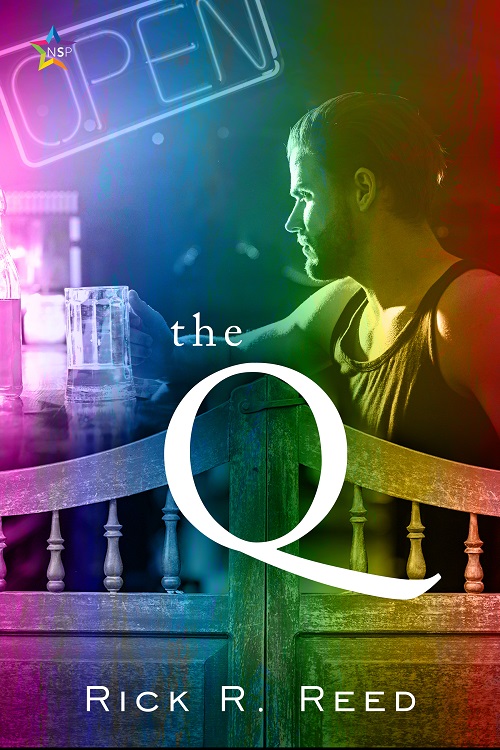
 The Q
is one of the books I'm most proud of. It also has the distinction of being the hardest to classify.

It chronicles one night at a small town gay bar in the foothills of the Appalachians (which is where I grew up) where all the locals gather. Through the course of one revelatory night, a memorable cast of characters come forward to share their stories—there’s heartbreak, missed connections, falling in love, falling out of love, making tough decisions, the exposure of secrets…and a lot more. 

There are a few books that inspired my desire to tell a story through individual glimpses into different lives over the course of one pivotal night. Spoon River Anthology, Winesburg, Ohio, and the Elizabeth Strout books, Olive Kitteridge and Olive, Again. All of these books basically weave short stories together to create a novel. I loved that idea and have had it in the back of my head for a while.

On a visit to my hometown, which is on the Ohio River and in the Appalachian foothills, I went with my sister one night to a dance club and casino in West Virginia. To draw people in to use the casino, the place has a live band for dancing every Saturday night and I watched all the regulars who come to dance and socialize and thought how they each have a story. And therein my idea for The Q was born. 

ABOUT THE BOOK


Step out for a Saturday night at The Q—the small town gay bar in Appalachia where the locals congregate. Whose secret love is revealed? What long-term relationship comes to a crossroad? What revelations come to light? The DJ mixes a soundtrack to inspire dancing, drinking, singing, and falling in (or out) of love.

This pivotal Saturday night at The Q is one its regulars will never forget. Lives irrevocably change. Laugh, shed a tear, and root for folks you’ll come to love and remember long after the last page.

BUY THE Q

Nine Star Press

Amazon Kindle 

Amazon Paperback 

Saturday, September 10, 2022

THE Q and Inspiration


 The Q
is one of the books I'm most proud of. It also has the distinction of being the hardest to classify.

It chronicles one night at a small town gay bar in the foothills of the Appalachians (which is where I grew up) where all the locals gather. Through the course of one revelatory night, a memorable cast of characters come forward to share their stories—there’s heartbreak, missed connections, falling in love, falling out of love, making tough decisions, the exposure of secrets…and a lot more. 

There are a few books that inspired my desire to tell a story through individual glimpses into different lives over the course of one pivotal night. Spoon River Anthology, Winesburg, Ohio, and the Elizabeth Strout books, Olive Kitteridge and Olive, Again. All of these books basically weave short stories together to create a novel. I loved that idea and have had it in the back of my head for a while.

On a visit to my hometown, which is on the Ohio River and in the Appalachian foothills, I went with my sister one night to a dance club and casino in West Virginia. To draw people in to use the casino, the place has a live band for dancing every Saturday night and I watched all the regulars who come to dance and socialize and thought how they each have a story.

And therein my idea for The Q was born. 

ABOUT THE BOOK


Step out for a Saturday night at The Q—the small town gay bar in Appalachia where the locals congregate. Whose secret love is revealed? What long-term relationship comes to a crossroad? What revelations come to light? The DJ mixes a soundtrack to inspire dancing, drinking, singing, and falling in (or out) of love.

This pivotal Saturday night at The Q is one its regulars will never forget. Lives irrevocably change. Laugh, shed a tear, and root for folks you’ll come to love and remember long after the last page.

BUY THE Q

Nine Star Press

Amazon Kindle 

Amazon Paperback 

Tuesday, January 4, 2022

What Inspired Me to Write THE Q


 The Q
is one of the books I'm most proud of. It also has the distinction of being the hardest to classify.

It chronicles one night at a small town gay bar in the foothills of the Appalachians (which is where I grew up) where all the locals gather. Through the course of one revelatory night, a memorable cast of characters come forward to share their stories—there’s heartbreak, missed connections, falling in love, falling out of love, making tough decisions, the exposure of secrets…and a lot more. 

There are a few books that inspired my desire to tell a story through individual glimpses into different lives over the course of one pivotal night. Spoon River Anthology, Winesburg, Ohio, and the Elizabeth Strout books, Olive Kitteridge and Olive, Again. All of these books basically weave short stories together to create a novel. I loved that idea and have had it in the back of my head for a while.

On a visit to my hometown, which is on the Ohio River and in the Appalachian foothills, I went with my sister one night to a dance club and casino in West Virginia. To draw people in to use the casino, the place has a live band for dancing every Saturday night and I watched all the regulars who come to dance and socialize and thought how they each have a story. And therein my idea for The Q was born. 

ABOUT THE BOOK


Step out for a Saturday night at The Q—the small town gay bar in Appalachia where the locals congregate. Whose secret love is revealed? What long-term relationship comes to a crossroad? What revelations come to light? The DJ mixes a soundtrack to inspire dancing, drinking, singing, and falling in (or out) of love.

This pivotal Saturday night at The Q is one its regulars will never forget. Lives irrevocably change. Laugh, shed a tear, and root for folks you’ll come to love and remember long after the last page.

BUY THE Q

Nine Star Press

Amazon Kindle 

Amazon Paperback 

Friday, December 3, 2021

New and Notable: Turnabout by Laury Egan


Title: Turnabout

Author: Laury A. Egan

Publisher: NineStar Press

Release Date: 11/30/2021

Heat Level: 3 - Some Sex

Pairing: Female/Female

Length: 78500

Genre: Historical (20th Century), LGBTQIA+, teenage romance, lesbian, lesbian love, sailing, PTSD, Vietnam War, 1960s, first love, mother-daughter relationships, young writers, class differences, New Jersey, coming-of-age

Add to Goodreads


Description

The summer of 1964. Four teenage lives intertwine as each searches for love, identity, and a passage through painful family conflicts, social isolation, and the confusion of sexual orientation.

During a sailing class, four teenagers meet.

Jessie Schaffer is fourteen, an intelligent and solitary girl, who dreams of becoming a writer. When she sees nineteen-year-old Lindsay Ames, the instructor, standing on a dock, sunlight illuminating her blond hair and blue eyes, Jessie falls in love but is too afraid of her feelings and what they mean.

In an attempt to reassure herself she is “normal,” Jessie becomes involved with two boys in the class: Kenny Crenshaw, also fourteen, a darkly handsome and flirtatious guy, and Calvin Brayburn, a year younger, who will be in their freshman class because he’s academically brilliant.

On the first day of sailing, Cal is smitten with Jessie, though he is hindered by shyness. As the romantic relationships take unexpected twists, Jessie, Lindsay, Calvin, and Kenny relate their individual stories, their hopes, fears, and longings, all the while being buffeted by intense pressures.

Set in coastal New Jersey, the plot roams from its beautiful rivers to lush scenes in St. Thomas and Vietnam’s jungles during the war.

Excerpt

Turnabout
Laury A. Egan © 2021
All Rights Reserved

Jessie
“I’m not going!” I state this as a firm fact; my mother hears acquiescence.

“And wear your new clam diggers and that boat-neck shirt I bought you.”

“No! I feel like an idiot in those clothes!”

My mother, who dresses perfectly for every occasion, arches an eyebrow, one that took hours to sculpt. “You are attending sailing class, and I want you to look nice. We will hear no more about it, Jessie.”

When the singular “I” migrates into the royal “we,” my goose is cooked.

“I will see you in the car. Ten minutes,” she says.

After she leaves the room, I go to the closet, slip the fake nautical clothes off hangers, and throw them on the bed where I slump beside them. “I’ll look like a fool,” I mutter as I stare at the blue-and-white-striped shirt and the white clam diggers decorated with red piping and baby sailboats. I shut my eyes in frustration and follow imperial orders.

«

I’m standing by the entrance to the Lenape Sailing and Yacht Club, hoping my mother will reconsider and take me home. I turn to plead with her, but she’s already backing the big black T-Bird out of the drive, its whitewalls spitting sand four feet past its chugging tailpipe. For a minute, I picture the car getting stuck but no luck. It’s me who’s stuck.

I scan the sky and beach. The morning sun has taken a hike, leaving a mash of clouds in its wake. The breeze sucks the tops off the cattails and raises goosebumps on my arms and the whitecaps on the river. With no real alternative, I walk through the clubhouse’s double doors, wishing I could fly out the other side, shoot off the dock, and do a Superman back home.

Inside, it smells like salt air, tired sun, and dried old wood. About ten kids—probably my class—are milling around looking self-conscious. Even though they appear nervous, my years of experience tell me they’ll do just fine, once the preliminary jitters smooth off, while I will not. Oh, sure, I can pick up the sailing stuff, but the rest? I stand by the window, thinking I don’t like groups because groups don’t like me.

“Hi.”

I turn. A boy with thick glasses is staring at me with a curious expression. His hazel eyes, magnified by the lenses, appear intelligent. He has small cuppy ears, an epidemic of brown freckles across his face and arms, and bright-red hair cut in straight bangs and parted unevenly on the left side of his square head. The boy is a little hunched, as if he’s already apologizing for future tallness. Despite his neat green shirt and navy cotton shorts, he doesn’t wear his body comfortably. The kid looks as ill at ease as I feel.

“Hi,” I reply, though I’m lukewarm in interest. I look over the group, hoping there is someone better to hitch up with. Most of the kids are about my age. Next week, on July 5, I’m turning fourteen.

“My name’s Calvin Brayburn.”

Calvin seems younger. Perhaps twelve nudging thirteen and oblivious to the huge barrier a year’s difference makes.

“Mine’s Jessie.”

“Jessie what?” He tilts his head and squints a little, as if his poor eyesight dulls his hearing.

“Jessie Schaffer.” I’m not a chatty type, particularly with strangers, which includes just about everyone I’ve ever met. How can I lose this kid? Should I play it high and mighty or chilly-neutral? Then, the teacher enters from a side room, saving me the decision.

“Hello, everyone. I’m Lindsay Ames, your sailing instructor.”

Lindsay is tall, or at least she is from my five-foot-four perspective. Short blond curly hair. Blue eyes. Long arms and legs already tan from being outside. Can’t tell if she is a senior going to be a freshman or a freshman home from college. Probably four or five years older than I am. I breathe easier. I’m more comfortable around adults.

Lindsay hands out mimeographed papers. “The parts of a sailboat and two pages of nautical knots,” she explains. “Don’t worry—we’ll go over them, but you’ll have to memorize the parts and how to tie a bowline and a cleat hitch by next week.”

One of the girls giggles and nudges her neighbor. I don’t see anything funny about knots, but maybe that’s because I’ve already taught myself a few—Dad said this would be expected.

“It’s too windy to go out today,” Lindsay continues, “so we’ll get acquainted and learn some of the basics.”

She takes a seat in a wooden armchair, and everyone sprawls onto couches and chairs around her as if she’s going to tell us a story. I sit on the floor opposite and stare at the blue Keds’ stamps on the back of my white sneakers.

“Let’s go around the room.” She nods to a girl with a ponytail. “What’s your name?”

When the kid smiles, silver braces glint like chrome on a Chrysler grille. “Melinda Whitmore,” Ponytail replies. “Hi!” She jerks her hand in the air and gives half a wave. She’s growing boobs that overwhelmed her training bra a long while ago.

“Hi, Melinda,” Lindsay replies. “Welcome aboard.”

I’m not positive I like this sailor heartiness, but so far, Lindsay seems okay. She then points to a guy with black, wavy hair and dark Romeo eyes.

“Hey,” he says in a false sheepish tone. “I’m Kenny Crenshaw.”

Melinda and the other girls exchange blushing glances. Kenny is instantly crowned “king” without any contest. I’m no slouch at rating pecking orders in social gatherings. Of course, none of the girls look at me for confirmation, a fact I also file away in my mental account ledger.

As if he senses his royal anointment, Kenny squares up his shoulders and drops his voice. “I already know how to sail,” he explains. “My dad has a boat.”

“Oh? What kind?” Lindsay asks.

Kenny Crenshaw smiles, confidence spreading across his face. “It’s a thirty-two-foot O’Day.”

“Nice boat,” the instructor says, smiling. “So, you must be quite accomplished.”

He stares at his feet and shrugs, as if he’s embarrassed. In that moment, my dislike of him rushes in like a squall.

“Yes, I am,” he answers. “Sort of.”

The “sort of” is another attempt to appear modest, though it doesn’t wash with me. His smug perfection stings like a pissed-off wasp. We’ll see who the better sailor is. I don’t have a clue why I’m feeling so competitive.

Melinda’s friends are Janey and Gretchen. The three of them are jump-rope types. That’s how I used to classify the popular girls in elementary school. I never mastered their games—skipping rope or their other activity—flirting—and still nourish a fine disdain for both. Sure, back then, the girls let me play sometimes, so I wasn’t on the outer orbit of Pluto, but I wasn’t really accepted, which is typical of the flip-flop nature of my life. Graduation from eighth grade didn’t improve my standing with boys either, and neither did the spring dance, a perfect ten on the misery scale. My mother tortured me into going solo and wearing an itchy chiffon dress and patent leather shoes that pinched. I was the weed amid the wallflowers and didn’t dance once. I’m glad we just moved to Bingham, where I’ll attend high school and hopefully make some friends.

There are four more students who introduce themselves: Steve, Cathy, Mary Lou, and Gene. The girls all cross their arms over their chests, protecting their budding growths, and the boys look careless and bored, like they’d just as soon be throwing rocks at beach rats. Everyone is sort of average looking compared to Kenny and Melinda, who, despite her dental work and giggles, has drawn the longest glances from the boys. Calvin is saving me from last place on the unpopularity register. When it’s my turn to say hello, I’m tempted to tell everyone my father has a sixty-nine-foot sailboat, just to see how it goes down. But one of my rules is that I only lie when I’m sure no one will catch on. Because I don’t know who makes boats that size, the last thing I want is King Kenny announcing there is no such thing. So, after giving my name, I clam up, ceding round one to him. At least Lindsay gives me a warm smile, but she smiles at all the kids.

After that, we go outside and investigate a Turnabout, a little ten-foot catboat we’re using for our lessons. Lindsay gives us the port/starboard/stern/bow info, shows us how to tell which way the wind is blowing by the little pink ribbon fluttering near the top of the mast, and demonstrates how to attach and hoist the single sail. The whole time she does this, my new friend Calvin sticks to my side tighter than a tick. Whenever I look at him, he grins like we’re already buddies. Melinda and Kenny aren’t listening to Lindsay because they’re whispering and digging elbows into each other.

Two hours later, when my mother arrives, I announce I don’t want to take sailing lessons anymore. She doesn’t listen.

Purchase

NineStar Press | Books2Read

Meet the Author

Laury A. Egan is the author of the YA novel, The Outcast Oracle; three suspense novels, Jenny Kidd, A Bittersweet Tale, and The Ungodly Hour; a comedy, Fabulous! An Opera Buffa; a collection, Fog and Other Stories; and a literary work, The Swimmer. Four limited-edition poetry volumes have been published: Snow, Shadows, a Stranger; Beneath the Lion’s Paw; The Sea & Beyond; and Presence & Absence. She lives on the northern coast of New Jersey where she sailed Turnabouts during her teenage years.

Website | Facebook | Twitter

Giveaway

a Rafflecopter giveaway

  Blog Button 2

Wednesday, June 23, 2021

NEW AND NOTABLE: The Illhenny Murders by Winnie Frolik


Title: The Illhenny Murders

Author: Winnie Frolik

Publisher: NineStar Press

Release Date: 06/21/2021

Heat Level: 2 - Fade to Black Sex

Pairing: Female/Female

Length: 67500

Genre: Historical, LGBTQIA+, genre, historical, crime, lesbian, 1930s, private detective, district nurse, murder

Add to Goodreads


Description

District Nurse Mary Grey saves the life of young architect, Anthony West, when he is involved a car wreck, only for West to tell her it was no accident. Someone tried to kill him. Mary is skeptical at first, but when West dies, she’s determined to investigate the matter. More blood is spilled, and Mary becomes embroiled in a tangled web of intrigue and murder as she joins forces with exiled Jewish German detective Franz Shaefer. And on top of everything else, Mary finds herself dangerously attracted to Anthony’s beautiful and unattainable sister Harriet.

Excerpt

The Illhenny Murders
Winnie Frolik © 2021
All Rights Reserved

October 1936, Illhenny, England

It was no longer night in Illhenny, but not quite morning. Those weird in-between hours, when the darkness began to retreat but the sun had not quite shown its face. Although at this time of year, the best Illhenny could hope for was some feeble rays of light peeking out from behind the fierce clouds dominating its sea line. Still, sunny or not, people had begun to stir. Fishermen went off in their boats to cast their nets and haggle with the sea. Tradesmen set out to open for the day. Farm folk had cows to milk and livestock to feed. Mothers began coaxing surly children from their beds to have breakfast before making their way to school. And the district nurse set off on her rounds.

District Nurse Mary Grey had known she would be quite busy that day. In preparation, she had eaten a solid, manly breakfast, and packed a ham sandwich for later. She wore an oversized knitted gray-green sweater, gifted to her by her sister, over her uniform to face the weather. She rode her BSA motorbike. Some uncharitable souls might have noted the bike was over a decade old, and hardly ideal for inclement weather. And in the UK, of course, inclement weather tends to be the norm. No matter. Mary loved the motorbike from the moment it had been issued to her by the Rural Nurses Association. She loved how the wind whipped in her face when she rode it full throttle. She loved the sense of power between her legs. She loved how speedily it could get her to her appointments. She loved occasionally beeping to people she met on the ride. Most of all, she loved the freedom and independence her motorbike represented. She even enjoyed cleaning it and keeping it fueled and oiled. Mary had never ridden a horse, let alone owned one, but she imagined her love for her motorbike was akin to what a rider might feel toward their faithful steed.

Mary rode her bike past the bakery, post office, the vicarage, and the forge. Her first task of the day was to check in on Mrs. Simpson, who’d recently had surgery in London. She was a widow of some sixty years of age, living on a small pension after her husband’s death.

“You need not have come, my dear,” Mrs. Simpson told her. “As you can see, I’ve made a full recovery.” To punctuate her point, Mrs. Simpson did an elegant little curtsey. She was surprisingly limber for a woman her age.

“You certainly are looking better. You don’t seem to have any trouble moving at all now,” Mary noted.

“No. In fact, I took a long walk around the village yesterday and will take another today.”

“You didn’t mind the cold?”

“Oh no! I found it quite refreshing,” Mrs. Simpson proclaimed. “There’s nothing like fresh sea air and exercise for one’s health, is there?”

“No argument there,” Mary agreed. “Will you be going to tomorrow’s meeting of the Illhenny Women’s Society?” Mrs. Simpson was known for her needlework and her keen interest in village affairs.

“Wild horses couldn’t keep me away. We are going to start decorating the church for Christmas. I picked up some new items in London to show everyone! There’s no place like London for shopping.”

“There certainly isn’t. In fact, I’m taking the train down tomorrow to stay with an old friend of mine for a couple of nights while her husband’s away.”

“Wait, is that your friend Phyllis?” Mrs. Simpson asked. “You’ve visited her before, haven’t you?”

“Well, her husband travels regularly, and she likes the company,” Mary explained, not making direct eye contact with Mrs. Simpson.

“Oh, well, that’s very kind of you then,” Mrs. Simpson remarked. “How exactly do you and Phyllis know each other?”

“I met her when I was studying at the Queen’s Institute for Nurses in London.” This time Mary was on solid ground. “And we’ve stayed in touch. You know, I really have to get on to my other appointments.”

“Of course, dear, of course.”

Mrs. Simpson waved a cheerful goodbye and Mary rode off.

Mary next called on rheumatic old Caleb Barnaby. Caleb was a grizzled fisherman with several teeth missing, but one molar long and sharp as a harpoon. He’d been a big man once but in the last year or so had begun to lose weight and his clothes now hung on him rather alarmingly. He lived quite alone with only a large ginger cat, Ahab, for company. His rooms were shabby and dark, with only a single window, but they did have one charm—handcrafted shelves filled with little birds, fish, seashells, deer, and other creatures, all beautifully carved out of wood by none other than Caleb himself. Caleb’s whittling and carpentry were famous in Illhenny. After coming in, Mary, as usual, opened the window to air the room a little, while Caleb groused.

“Just kill me all the faster, the chill air will.”

“No, it won’t.”

“Will too!” Caleb retorted. “Cold gets worse every year for me old bones.” He gave a melodramatic sigh. “This will be my last winter, it will. Ought to start planning my funeral.”

“What would you have them write on your headstone?” Mary asked, amused.

“Don’t want a headstone,” Caleb pronounced. “Waste of time and stone if you ask me. Don’t want to be left in a box in the ground to rot either. I’d rather be taken by the wind or the sea. That way, at least I’d get to travel a b—”

There was a loud crashing sound and a startled Mary turned just in time to see a pile of wooden carvings on the floor while an orange blur raced around a corner and out of sight.

“Go ahead and run, you coward! You cur!” Caleb shouted. “If I ever get my hands on you, I’ll turn you into slippers!”

Mary had heard similar threats from Caleb before regarding Ahab’s crimes, and knew them to be empty. She instead set out about picking up the wooden figures and returning them to their rightful place. As she did so, she spotted an envelope hidden in a cleft among the shelves and, on an impulse, took a peek at its contents.

Much to her amusement, it was filled with cheap little pictures of women in various stages of undress. Pornography and smut were illegal in England, but that didn’t seem to diminish its popularity one jot. Most of the women were simply posing, but some of them were more active. In fact, several of the photos included men as well, engaging in all sorts of calisthenics with the women. Mary hurriedly put the envelope away.

“What you doing now?” Caleb asked.

“Nothing! Just examining your workmanship. How about I put on the kettle?”

“Tea? What good is tea? Now whiskey, aye, that’s proper medicine. I’ll have me a shot now.”

“But it isn’t even noon,” Mary pointed out.

“Exactly. I need breakfast!” Caleb drained the shot with satisfaction. “Come you, nurse, join me in a tipple. It’ll put some color in your cheeks, do you a load of good.”

“Sorry, but I’m not allowed to drink on duty. Those are the rules.”

“Too many damned rules,” Caleb grumbled. “That’s what’s wrong with the world these days.”

“I don’t know that the problem is the number of rules themselves,” Mary said thoughtfully, “so much as who makes them.”

“Hmph. Speaking of people who make the rules, Lord Pool’s called a town meeting tonight at the dance hall.”

“A meeting? About what?”

“Don’t know. Didn’t say anything. But his friend from next door is going to be there as well.”

“I heard The Laurels had just been rented out to some young man from London,” Mary mused. “I wondered what that was about. We don’t get many visitors from London here. In fact, we usually don’t get any.”

Caleb scowled. “No good will come of this. I can smell it. You mark my words!”

Mary did not respond to this premonition but kept to her schedule. As she rode past Mr. Legge’s tobacco shop, she saw pretty, young Mrs. Legge assisting Mr. Winthrop, the vicar. Mr. Legge, who was quite a bit older than his wife, stood directly outside the shop, engaged in an argument with Dick Townley, Lord Pool’s gamekeeper.

“No more credit for you, you wastrel! You ever darken my door without the money you owe me, and it’ll be my boot up your arse!”

“I’d like to see you try.” Townley spat on the ground, but he left the shop empty handed.

Mary passed Constable Evans as well. He was still a young man with plump cheeks, red as apples.

“Hello, Nurse Grey.” He tipped his hat to her. “Busy day, is it?”

“It’s always busy. What about you?”

“Getting a cat out of a tree has been the highlight of my morning. Had some more excitement yesterday though. Another one of those tramps came around and I had to clear him off. There seem to be more of them every week.” He frowned.

“The slump perhaps,” Mary suggested. “Too many poor souls out of work with nowhere to go.”

“Maybe, but they can’t come here,” Evans retorted. “I have my orders to keep them out. Well, I’ll leave you to your caseload.”

The saddest part of Mary’s day was visiting poor Annie Capman with her consumption. Annie was from an industrial town in the north but, because of her health, she’d moved to Illhenny in hopes the fresh sea air would revive her. Sadly, while Annie did enjoy a respite from breathing in black smoke and soot, it soon became clear her days were numbered no matter where she lived. The other villagers in Illhenny kept their distance from the little cottage Annie lodged in, fearing contagion. Annie’s coal and groceries were always delivered and left outside. Mary entered the cottage directly with a key left underneath a stone in the yard to see Annie’s skeletal figure in bed, swallowed up by comforters and sheets.

“Mary.” Annie’s hollowed pale face shone at the sight of the nurse. “It’s so good to see you.”

“How are you feeling today, Annie?” Mary asked.

“Tired,” Annie replied. “I know you say it does me good to walk outside, but today I’m afraid I haven’t the energy for it.”

“That’s all right, Annie,” Mary reassured her. “Let me open the windows at least and get some fresh air in for you. I’ve got another bottle of that tonic you like.”

Mary dosed Annie, helped her bathe in the wash basin, and combed her hair before tucking her into her newly changed bed with tea and biscuits.

“Rest now,” Mary told her as Annie shut her eyes and drifted off to sleep.

Mary’s final appointment of the day was at the Martins’ farm to check on Mrs. Martin and weigh the newborn twin boys who Mary had delivered herself just fourteen days before. This visit in particular gave Mary cause for worry. Not so much the twins themselves—they were both putting on weight nicely and had hearty lungs they kept in good order with constant roaring. No, the rest of the family concerned Nurse Grey. The birth of the twins had brought the total number of children at the farm to nine, all crowded together on top of one another. From the moment she entered the home, Mary was met with the smell of dirty nappies and unwashed dishes. Without electricity, plumbing, or running water, it was difficult to maintain even the most basic level of sanitation in the home. Mrs. Martin had dark circles around her eyes, like someone had smeared coal there, and a dull, blank stare. Her hair was tangled as a bird’s nest and she had a nasty cough as well. She was uncommunicative and answered questions with just a “yes” or “no.”

Finally, Nurse Grey had directed her questions to the eldest girl, Libby. Libby informed Mary that her mother hadn’t slept for days thanks to the twins’ constant bawling, and she had seemed off her food as well. Thirteen-year-old Libby had more or less taken charge of the household and the care of her younger siblings. Mr. Martin had not been present during the interview, and Eliza volunteered that her father had been spending less time than ever at home since the twins were born. His hours minding the farm had always been long, but now it seemed he didn’t come home most nights at all. Rather he went to The Mud Crab or slept in the barn, finding it more comfortable than the Martin household at present. Looking at the dirt and grime around her, as the twins began to bawl once more, Nurse Grey understood why. Still, the absence of a father and husband in the home was only making things worse.

“Is there anyone who could come and help your mum? A neighbor perhaps? Or family?”

Libby thought a moment. “Aunt Amy,” she said. “She’s Mum’s sister and she works as a housekeeper in Anchester.” Anchester was a market town some six miles distant.

“Would we have to send a message in person, or does she have a phone?” Nurse Grey asked.

“The house she works at has a phone,” Libby replied.

“Good! Do you know the number?”

Libby shook her head.

“That’s all right. Directory can probably find you the number as long as you know who and where her employer is.”

“I know that,” Libby stated firmly.

“Then run down to the call box by the post office. Here are some coins for the phone. Tell your aunt to come here as quickly as possible, assuming she can get the time off.”

Libby turned to go, and Mary called after her, “Remember to wear your mittens!”

Nurse Grey spent the next few hours doing her best to clean up around the household, having one of the children draw her water from outside, and delegating tasks of sweeping, mopping, and laundry. A hearty new fire was built to warm the place up a bit. The twins were fed, bathed, and changed. Meanwhile, Mrs. Martin was given hot tea and put to bed for some much-needed sleep. As Mary started making porridge for supper, Libby returned.

“I spoke to Aunt Amy and she spoke to her employer. She’ll be here tomorrow.”

“That’s wonderful news! But we will have to keep an eye on your mum’s cough too,” Mary told Libby. “If it gets any worse or lasts much longer, she may need to see a doctor.”

Libby nodded, though she did not look happy. “Doctors are expensive, ma’am.”

Nurse Grey sympathized. “I know. Hopefully, though, once your mum gets some rest, she will start to get better on her own. Make sure she rests by the fire and drinks lots of hot tea.”

By the time Mary left the Martins’, it was nearly time for the public meeting. And while Mary Grey was no native to Illhenny, a district nurse should always try to stay appraised of matters within the local community. She rushed to attend and managed to get in the doors of the local dance hall just before the meeting began. It seemed half of Illhenny was crammed into the room, seated in rickety folding chairs, and Mary despaired of finding a seat.

“Hey, Nurse Grey, come you here!” Caleb Barnaby gestured to Mary to join him on a bench and somehow managed to squeeze in room for her.

“Thank you, Caleb.”

“I may need you before the night is out,” Caleb told her. Mary looked around. The walls of the hall were still decorated with the cheap paper and tinsel from the last dance. The wooden floor was scuffed from constant use over the years, and the air permeated with the smells of resin, varnish, and dried sweat.

At the far end of the hall, at a makeshift podium, stood Lord Pool, darkly handsome in a Savile Row suit. Next to him stood a remarkably fair young man wearing cream colored linen slacks, with white-blond hair that he’d grown out to a shocking degree. There was also a large free-standing presentation desk; recognizable from the form, but with a curtain drawn hiding the main display.

“That must be Lord Pool’s friend,” Mary noted.

Caleb gave a rude snort. “Looks like a poofter to me,” he grumbled. “London’s full of nancy boys and perverts.”

Mary ignored this and waved to Mrs. Simpson across the room. At last, as the conversations in the seats built in a crescendo of curiosity, Lord Pool stood up to a microphone and, after a few staticky attempts, was able to make himself heard throughout the hall.

“I imagine,” he began, “you’re all wondering why I’ve called this meeting. Well, the reason is because I have decided to partake in an investment opportunity. And the opportunity in question directly involves all of you. As most of you well know, my family has been here for centuries. We consider ourselves deeply rooted within this community, and that its fortunes and ours are intertwined.” Lord Pool paused and looked around the room meaningfully. Not a whisper was to be heard. “Which is why it truly grieves me to say that Illhenny has for some years been in a state of decline.” Voices rose in a sudden murmur throughout the room. “Oh, it’s no one’s fault,” he continued, “but neither the fishing or agriculture around here are what they once were, and mining’s long gone. To survive, Illhenny must adapt with the times, which is why it is my great pleasure to introduce you to my old and dear friend, Anthony West, who happens to be one of England’s most promising young architects. Anthony?”

The blond man was passed the microphone and Lord Pool stepped aside, and then, to Mary’s surprise, left the podium altogether. It was almost as if he was fleeing the scene. Anthony West stared at a crowd full of strangers, eyeing him suspiciously, without quailing.

“As Edgar—I mean Lord Pool—just told you, I’m an architect,” Anthony began, “and I’m proud to announce that my next project will be—” He put his hands on the display case and drew away the curtain. “—a grand, new seaside resort, right here in your community!” Now visible were schematics for a very modern looking hotel in the Art Deco style, all windows and curved white walls, with a huge veranda positioned right along the beach.

There was a moment of stunned silence, and then the whole hall exploded.

“What about noise?” someone shouted.

“What about all the new traffic?” Mrs. Simpson fretted.

“We’ll be overrun with tourists,” Mr. Wilberforce lamented, and there came a chorus of agreement.

“You bastard!” Caleb Barnaby had risen to his feet, his face as red as a tomato, and screamed at Anthony West. “I knew something was up. I knew you were no good just looking at you! And I was right! You’re going to ruin this town!”

“Ruin it?” Anthony West was indignant. “I’m saving it!”

Mary noticed that Lord Pool was nowhere in sight.

“Bollocks! You’d turn this place into nothing more than a watering hole for rich fops like yourself!” The assertion on Caleb’s part prompted a resounding “aye” across the room.

“Yes, well, better your town had a few more fops like me than drunken oafs like yourself,” Anthony retorted frostily.

Caleb started striding to the podium.

“Wait a minute. What’s he doing?” Anthony wondered aloud.

“I’ll teach you a good lesson,” Caleb snarled, and young Mr. West looked alarmed. Fortunately, at that moment, Constable Evans intervened and manually escorted Caleb away. The meeting broke up in a general disorder.

Purchase

NineStar Press | Books2Read

Meet the Author

Born and raised in Pittsburgh, the Carnegie Library in Oakland was always my second home. I was diagnosed as being a high functioning autistic in college. I hold a useless double major in English literature and creative writing. I’ve worked at nonprofit agencies, in food service, and most recently as a dog-walker/petsitter but the siren song of writing keeps pulling me back into its dark grip. I have co-authored a book on women in the US Senate with Billy Herzig, self-published The Dog-Walking Diaries, and in 2020 my first novel Sarah Crow was published by One Idea Press. I live in my hometown Pittsburgh with my better half, Smoky the Cat.

Facebook | eMail

Giveaway

a Rafflecopter giveaway

  Blog Button 2

Wednesday, June 16, 2021

Inspiration and THE Q


 The Q
is one of the books I'm most proud of. It also has the distinction of being the hardest to classify.

It chronicles one night at a small town gay bar in the foothills of the Appalachians (which is where I grew up) where all the locals gather. Through the course of one revelatory night, a memorable cast of characters come forward to share their stories—there’s heartbreak, missed connections, falling in love, falling out of love, making tough decisions, the exposure of secrets…and a lot more. 

There are a few books that inspired my desire to tell a story through individual glimpses into different lives over the course of one pivotal night. Spoon River Anthology, Winesburg, Ohio, and the Elizabeth Strout books, Olive Kitteridge and Olive, Again. All of these books basically weave short stories together to create a novel. I loved that idea and have had it in the back of my head for a while.

On a visit to my hometown, which is on the Ohio River and in the Appalachian foothills, I went with my sister one night to a dance club and casino in West Virginia. To draw people in to use the casino, the place has a live band for dancing every Saturday night and I watched all the regulars who come to dance and socialize and thought how they each have a story. And therein my idea for The Q was born. 

ABOUT THE BOOK


Step out for a Saturday night at The Q—the small town gay bar in Appalachia where the locals congregate. Whose secret love is revealed? What long-term relationship comes to a crossroad? What revelations come to light? The DJ mixes a soundtrack to inspire dancing, drinking, singing, and falling in (or out) of love.

This pivotal Saturday night at The Q is one its regulars will never forget. Lives irrevocably change. Laugh, shed a tear, and root for folks you’ll come to love and remember long after the last page.

BUY THE Q

Nine Star Press

Amazon Kindle 

Amazon Paperback 

Monday, February 15, 2021

What Inspired Me to Write THE Q


 The Q
is one of the books I'm most proud of. It also has the distinction of being the hardest to classify.

It chronicles one night at a small town gay bar in the foothills of the Appalachians (which is where I grew up) where all the locals gather. Through the course of one revelatory night, a memorable cast of characters come forward to share their stories—there’s heartbreak, missed connections, falling in love, falling out of love, making tough decisions, the exposure of secrets…and a lot more. 

There are a few books that inspired my desire to tell a story through individual glimpses into different lives over the course of one pivotal night. Spoon River Anthology, Winesburg, Ohio, and the Elizabeth Strout books, Olive Kitteridge and Olive, Again. All of these books basically weave short stories together to create a novel. I loved that idea and have had it in the back of my head for a while.

On a visit to my hometown, which is on the Ohio River and in the Appalachian foothills, I went with my sister one night to a dance club and casino in West Virginia. To draw people in to use the casino, the place has a live band for dancing every Saturday night and I watched all the regulars who come to dance and socialize and thought how they each have a story. And therein my idea for The Q was born. 

ABOUT THE BOOK


Step out for a Saturday night at The Q—the small town gay bar in Appalachia where the locals congregate. Whose secret love is revealed? What long-term relationship comes to a crossroad? What revelations come to light? The DJ mixes a soundtrack to inspire dancing, drinking, singing, and falling in (or out) of love.

This pivotal Saturday night at The Q is one its regulars will never forget. Lives irrevocably change. Laugh, shed a tear, and root for folks you’ll come to love and remember long after the last page.

BUY THE Q

Nine Star Press

Amazon Kindle 

Amazon Paperback 

Tuesday, February 2, 2021

NEW RELEASE! Step out for a Night at The Q by Rick R. Reed


Genre: Contemporary, LGBTQIA+, Contemporary, Ace, Bi, Gay, Lesbian, Family drama, bartenders, blue collar, coming-of-age, coming out, hurt/comfort, soulmates, open relationship, #ownvoices, over 40, reunited

Add to Goodreads

About the Book

Step out for a Saturday night at The Q—the small town gay bar in Appalachia where the locals congregate. Whose secret love is revealed? What long-term relationship comes to a crossroad? What revelations come to light? The DJ mixes a soundtrack to inspire dancing, drinking, singing, and falling in (or out) of love.

This pivotal Saturday night at The Q is one its regulars will never forget. Lives irrevocably change. Laugh, shed a tear, and root for folks you’ll come to love and remember long after the last page.

Excerpt

The Q
Rick R. Reed © 2021
All Rights Reserved

Chapter One: Hey Bartender!

Mary Louise hated the term fag hag.

It was demoralizing, conjuring up an image of an older woman, heavyset, with too much makeup and hair that was too big. She would be sitting at home with her two cats, Will and Grace, drinking Cosmos alone and streaming Queer as Folk or Queer Eye while she waited for one of her gay male friends to call to shape and determine the extent of her social life. She’d maybe drink a little too much and laugh a little too loud. She’d play wingperson and watch wistfully from the sidelines as her cohorts paired off for an evening, a week, a month, or a lifetime. She’d tell her friends and family who’d never darkened the threshold of a gay bar that she liked going to them because she didn’t get hit on by predatory losers and she could let her hair down.

She knew the stereotype because for many years she’d been it—well, maybe not exactly, but close enough to make her cringe at the memory.

Sure, she still owned cats (or they her, far more likely), who were Siamese and not named Will and Grace, but Harry and Sally. Her hair had never been big and her idea of great TV was streaming the Golden Girls on Hulu. “Okay, so that’s a little gay,” she heard Sophia saying in the back of her mind. Her drinking taste leaned much more toward beer or a nice glass of whiskey, neat.

She’d broken free of being the wingwoman to the various gay men she befriended. She’d gotten rid of the idea that her happiness depended on a man, gay or otherwise.

She still laughed too loud and probably always would. One of her friends, Mort, delighted in acting out a scene with her from Who’s Afraid of Virginia Woolf when she let loose with one of her ear-splitting laughs. He’d accuse her of braying, and she’d respond, in her best Elizabeth Taylor, “I don’t bray,” and then command him to make her another gin and tonic. He always would comply and would sheepishly respond, “All right. You don’t bray.”

Mort had been gone since 1992, when AIDS took him at the tender age of twenty-eight. Mary Louise still missed him and kept a picture of the two of them, taken while on vacation in Provincetown, a year before Mort was diagnosed. She’d look at that photograph of the two of them, arms slung around each other on Commercial Street, and her eyes would well with tears, even though it had been close to thirty years since Mort had passed in an AIDS ward in a Pittsburgh hospital with only Mary Louise at his side. That loss still was tragic, not only because of Mort’s tender age, but because he was so alone. His partner, Nate, and his folks in Shippingport had abandoned him, the former claiming he couldn’t stand to see him this way and the latter voicing concerns that they might catch the virus. He was your son! She’d wanted to scream at the parents. He needed your arms around him. He needed you to see him. He was your lover! she’d say to Nate. His dying and death wasn’t about you and your fragile feelings.

Mary Louise hoped there was a special place in hell waiting for all three of them.

She’d watched many of her friends succumb to the virus before protease inhibitors came onto the scene, turning what was a death sentence into a somewhat manageable condition. She’d never stop mourning the loss of so many beautiful men.

When the fallout from all this was over, for all practical purposes, Mary Louise found herself bereft of friends. That’s when she decided to pack up and move back to her home town of Hopewell, where her mom and two sisters still lived. There was comfort in coming home to a place where her roots were deeply embedded, even if the area was blighted with poverty. It was still some of the most beautiful countryside Mary Louise could imagine.

Chicago had suddenly seemed too big and, at the same time, paradoxically empty. There were so many reminders—the Boystown strip along Halsted, the Baton Club on Clark, the Swedish restaurant Ann Sather next to the Belmont L stop—all of these places and so many more held more painful memories than she could count, even if they had the power to make her smile and laugh. She figured time and distance would transform the painful memories into joyous ones.

But each recollection of a night of drunken revelry out with her boys or a bleary-eyed brunch the morning after, were a hot touch to her grief, a pain that may have softened, but never went away. Mary Louise was grateful—she’d never willingly give up the hurt. She wanted to hold onto these memories of her boys forever. Despite the fact she was a bit of a stereotype and fit the fag hag profile pretty much to a T, the days and nights in Chicago with her circle of gay friends had been some of the happiest days of her life. And she didn’t even realize it at the time. Wasn’t that always the way?

Hopewell brought a sense of quiet, with its looming tree-covered hills—the foothills of the Appalachians and its position on a winding curve of the mud-brown Ohio River.

Moving back had simplified her life, even if it drained a lot of the bustle and color from it. In Chicago, she never walked alone; the streets, no matter the time of day or night, were always busy. In Hopewell, she could wander and never bump into anyone.

It was her mom, at eighty-six, who needed her help with things like shopping, cooking, running errands, and chauffeuring her to doctor’s appointments. Old Trudy, as she and her sisters referred to her behind her back, refused to move in with one of them, or God forbid, the assisted living facility up the road in Newell. Trudy always said, “I live alone because I like it. They say money is the root of all evil, but the truth is it’s people.”

Mom got by with her girls. And Mary Louise, even as she sometimes got nostalgic for the bright lights and hustle of the big city, knew she was doing the right thing. She’d experienced the Chicago skyline on a clear night, Lake Michigan’s blue/aqua/gray waves crashing against the shore, and the vast diversity of people living on its shore, and no one could ever take those memories away.

Even if she was feisty, clearheaded, and mobile, no one knew how much longer Mom would be with them.

At the Q, Mary Louise still could eye the boys, flirt with them, tease them, and play matchmaker in her role as bartender.

Right now, she stood behind the bar in a pair of unflattering black orthopedic shoes. Once upon a time, Mary Louise adored a pair of CFM (come-fuck-me) pumps with four-inch spikes. Oh, how great they made her legs look back in the day! Not that many noticed in hangouts like Sidetrack or Roscoe’s.

Now, midfifties, she needed to be comfortable when she was on her feet all night. Her smile depended on it, and thus her tips.

Currently, she waited for the doors to open, which would happen in about an hour. She was blissfully alone. Well, maybe blissful wasn’t the right word because all the lights were on as she prepped citrus and olives for drinks, washed glasses, polished the bar, and made sure the bottles behind it were stocked and ready to go.

The overhead lights cruelly stole most of the limited magic the Q possessed. And that was too bad. One of Mary Louise’s favorite characters was the tragic Blanche Dubois, from Tennessee Williams’s A Streetcar Named Desire and one of her favorite lines from the show was Blanche’s opinion that she didn’t want realism, she wanted magic. The shadows, soft lighting, and even the disco ball above the dance floor lent a kind of alchemy to the place, transforming it from run down to a setting where anything could happen, where hope lived.

Just before the doors opened, though, the joint looked tired and sad (as Mary Louise herself often felt). The cinder block walls, painted black, possessed a menacing air, like a dungeon—and not a fun one! The concrete floor, stained, showed its grit and the cracks that ran through it. Even the single long rectangle window at the front appeared dusty. Night pressed in on the tinted glass like a monster, hungry for admittance.

Stop it! Now you’re just getting crazy. Mary Louise finished her prep work and allowed herself a moment to sit on the stool she kept behind the bar. It might be her last chance for several hours to relax, if only for a few minutes. She dreaded the coming ache of her feet at evening’s end, orthopedic shoes or not.

But, oh, how she looked forward to seeing everyone! Every Saturday night was a party, and she was the hostess with the mostess.

Despite how some of the regulars could try her patience down to its last reserves, it brought her joy to watch the revelers, to serve them, to offer oblivion in a glass or a bottle. Even though her dancing days, mostly, were well behind her, she loved seeing everyone out there, bodies gyrating and spinning. Some were great, others awkward, others downright embarrassing, but to witness them cut loose after a long week was a thing of beauty, no matter their level of expertise or coordination. She especially loved some of the older patrons, who would bring their shakers of corn starch in to sprinkle on the floor, making it easier to slip and slide to the pulsing dance beat.

Gracie, Rose, and Liz were a lesbian trio that she particularly adored. Even though she’d never had much conversation with them, other than to take their drink orders, the three seemed so well-adjusted and happy, despite never once pairing off, as half the bar expected them to do. And Mary Louise, who considered herself a pretty astute observer of human nature, could tell from a mile away that Gracie was in love with Rose. So obvious! Why couldn’t Rose see it? Or did she simply not want to? Mary Louise had wondered if maybe they were a throuple, but everyone she talked to about that particular suspicion shot in down. “They’re best friends, that’s all.”

She turned as the door squeaked open. There stood Billy Breedlove, her barback and bouncer when needed (not often) in his usual garb—black combat boots, black cargo pants, and a black T-shirt that appeared to be painted on his beefy physique—looking worried.

Mary Louise was taken a little aback. For one, her breath always did a little catch in her throat when she saw him, accompanied by a skip of a heartbeat. He was a beautiful man with his muscles, his bleached-blond buzz cut, and the tattoo sleeves, wildly colorful butterflies and birds that ran down both arms. The fact that he was unattainable made him even more attractive.

And then she’d chide herself. That young man is a good twenty years younger than you, if not more. Cougar. Shame on you.

He’d once told her, when the doors were closed and the lights back on, as they concluded the evening’s business and everyone had headed home, that he was a volcel.

“What the hell’s that?” Mary Louise had asked, mystified.

“I’m an ace,” he’d said, only confusing her further.

“Voluntary celibate, asexual,” Billy told her. “I’m better off without the nasty, you know. I just don’t want it. It would be hard, no pun intended, if it didn’t work for me. But honestly, I never think about sex. Call me weird, but it works for me. And that’s all that matters.”

On hearing those words, she laughed, disbelieving. She fully expected him to laugh, too, maybe slug her in the arm for being gullible. When he didn’t join her in her laughter, her heart broke for him because she knew he wasn’t kidding. She’d pined with unrequited love for gay men most of her adult life and here was one who was most likely straight. And wouldn’t you know it? He’d sworn off sex.

The world was a hopeless place.

He’s too young for you anyway.

The second reason Mary Louise was taken aback was from the worry stamped on Billy’s face.

“There’s been an accident,” he called over. “It’s bad.”

“Oh no.” Mary Louise stood. “What happened?”

Purchase

NineStar Press | Books2Read


Facebook | Twitter | Instagram

Giveaway

a Rafflecopter giveaway

  Blog Button 2

Wednesday, October 14, 2020

NEW! PERCEPTIONS by Mary Eicher is Now Out!

Title: Perceptions

Series: Artemis, Book Two

Author: Mary Eicher

Publisher: NineStar Press

Release Date: October 12, 2020

Heat Level: 3 - Some Sex

Pairing: Female/Female

Length: 70800

Genre: Paranormal, LGBTQIA+, Contemporary, paranormal, family-drama, crime, lit, lesbian, precognition, fake religious cult, Hawaii, astronomy, Greek mythology, Roman Catholic Church, goddess, ancient aliens, detective

Add to Goodreads

Synopsis

A fourteen year-old boy is struck by a car and left to die in a derelict section of town. He is the latest victim in a rash of deadly accidents spoiling a hot California summer.

Artemis Andronikos, a beautiful attorney with a teenage of her own, knows the deaths are not the unrelated mishaps the authorities assume. The victims are Harbinger children gifted with extraordinary perceptive abilities. It has been seven years since the Harbinger suddenly appeared enabling people to foresee traumatic events. The new sense has proved most dramatic in young children. Now the prescient children are becoming adolescents. And the world’s power centers are becoming alarmed.

Artemis and her partner Lucy Breem, put aside their comfortable Maui lifestyle to investigate who or what is luring the children to their deaths. What they discover shocks the conscience. The ancients left a warning for future generations. The future of mankind has been wrested in the hands of the Harbinger children. And someone unexpected wants the power back.

Excerpt

Perceptions
Mary Eicher © 2020
All Rights Reserved

Angie rode the remnants of a collapsing wave onto the beach, hopped expertly off the board, and let it sidle along the sand. Her blonde hair fluttered in the wind as she retrieved the board and waved at the slender dark-haired woman watching from a nearby bluff.

“Not bad!” Artemis called down, pleased with the progress her niece was making. Lucy’s pretty young daughter possessed grace and balance and something more, something harder to define but undeniably present in the girl’s confident hazel eyes.

Artemis waited for the girl to saunter up the beach toward her and shook her head. Angie’s trim, agile body was on the verge of adolescence. In a month she would officially be in her teens and the very thought gave Artemis a chill. Whatever influence either she or Lucy had over Angie would soon dissipate like waves withdrawing from the beach. And given the horrors of the current world what would be normal trepidation tipped toward full blown terror.

She greeted Angie with an arm around her shoulders and a gentle hug.

“Can we show Mom?” Angie asked, giving her aunt an imploring look.

“Sure. I’ll text her right now.” Artemis shielded her eyes to check the sun descending in the west. “It’s close to closing time. Lucy should be able to close up shop and head this way. Want to get some lemonade while we wait?”

Angie nodded enthusiastically. “Can we get…?”

“…another round of Maui onion rings?” Artemis chuckled at Angie’s happy fist pump in response.

They headed to Leilani’s and took a free table on the patio. Lucy arrived twenty minutes later, still dressed in her shop clerk slacks and blouse, just as Angie polished off the final greasy onion ring. She gave Artemis a disapproving frown when she saw what they’d been eating and settled into the chair between them.

“Claire wanted to stay open for art night, so I left her in charge instead of closing up,” Lucy said, motioning the waitress for her usual pineapple iced tea. “I think she likes running the shop almost as much as she loves shopping.”

Artemis’s eyes crinkled in amusement. “No doubt about that. Buying and selling are all the same to Claire so long as she gets to be in an air-conditioned store. I hope we’ll have some inventory left though. We aren’t getting supplies again for three more days. And it promises to be a busy weekend.”

Lucy accepted the frosty glass from the waitress and took a long drink. “Oh, I needed that. This has been one hot summer.” She rolled the glass along her forehead and relished the coolness. “I may never get used to the tropics.”

“Maybe you’re just having hot flashes, Mom,” Angie offered with a wicked little smirk.

Not amused, Lucy glanced at Artemis who was sucking in her cheeks to keep from laughing and turned to scowl at her daughter. “Listen, kid. You aren’t a teenager yet. I still have a few weeks before I have to put up with that ‘you are so old’ commentary.”

Lucy set the glass of tea on the table with a thud and gritted her teeth. Artemis was not being helpful and if her partner laughed out loud Lucy was going to—something. She wasn’t quite sure what. Artemis may be her soulmate, but she was also a formidable opponent.

“Temmie! Don’t you dare encourage her!”

“Me?” Artemis asked innocently, touching a finger to her chest. She looked sternly at Angie. “I think your mother wears her age rather well.”

“For an old lady. You’re both past thirty, you know,” Angie chirped and stood up, ready to perform the new surfing skill they’d summoned Lucy to observe. She hooked her board under her arm and started for the beach. Halfway there, Angie froze and stood staring silently at the gentle surf.

Artemis sensed the danger an instant later. She jumped to her feet and searched the ocean where Angie’s gaze was focused. A pair of surfers bobbed in the growing swells about forty yards out.

Angie raised her arm and pointed. “There!”

Artemis took off down the beach, propelling her body with long powerful strides. She dove into the water and swam toward the surfers, closing the distance between them with quick rhythmic strokes. Aware of the hungry presence loitering below, Artemis plunged down and searched the silted water. In front of her was a young tiger shark, tasting the water with its open mouth. Artemis surfaced and called to the two boys perched on their boards, legs dangling in the swells.

The shark swam lazily beneath the bobbing surfboards and began a long, hunting circle back toward them. Artemis grabbed the tip of the first board and shook it, getting the attention of the boys, who were mesmerized by the circling fin. She pointed to the beach thirty yards behind them. The two surfers flattened themselves on their boards and began to paddle toward shore. Artemis trod water, her eyes locked on the rapidly approaching fin.

Taking a deep breath, she let her body go limp and sink upright below the surface within arm’s reach of the animal. The shark moved its head back and forth in the water, testing the new scent to determine if it was prey. Artemis watched the shark move slowly toward her. Her pale eyes darkened, bits of light sparkling at the edges. Gliding past her, the shark gave a swing of its powerful tail and retreated in search of a more appealing meal.

The two teenage surfers waited on the beach to thank the woman who had warned them. They watched her emerge from the surf, soaked shorts and tee clinging to her body. To the boys the tall, shapely figure was Venus rising from the ocean and they stood transfixed by the vision. Artemis shook water from her long hair and glanced at the boys with a trace of amusement in her ice-blue eyes. They stared as she whisked sea water from her torso and brushed her hair to one side. She nodded as she passed them, relieved the two boys would not join the growing list of youngsters who had not made it through the summer.

“You confused it,” Angie said, a touch of awe in her voice when her aunt returned.

“She was just hungry.” Artemis shrugged, enfolding Angie in a hug and playfully knuckling the top of her head. “She was a teenager interested in grabbing a snack just like someone else I know.”

Lucy gave the pair a quizzical look. What had her daughter felt, she wondered. The shark’s presence? Its hunger? Or just a sense of danger? Angie’s premonitions came in so many different forms of late it was impossible to know for certain. The ability was continuing to develop, not in Angie alone but in the minds of many of the children of the Harbinger generation. Lucy sipped her drink, silently pondering what alarmed her most: Angie’s premonitions or Artemis’s reckless charges into harm’s way.

Purchase

NineStar Press | Books2Read Universal Link

Meet the Author

I live in Southern California with my two daughters. I have degrees in English and Psychology from the University of California and twenty plus years of writing experience from technical manuals to short stories. As an executive with a major computer firm, I managed customer documentation and field training and have traveled extensively. I have a passion for history, alternative theories about life’s mysteries life and dolphins. Find Mary on Facebook.

Giveaway

a Rafflecopter giveaway

  Blog Button 2

Monday, April 29, 2019

New and Notable: A GRACIOUS HERESY: THE QUEER CALLING OF AN UNLIKELY PROPHET

This book is for anyone who wants to live an honest, authentic, and loving life, despite the risks they might encounter by doing so.

Connie Tuttle's spiritual journey is a must-read for anyone who has ever had to hide or even felt the need to hide who they are from the world. She demonstrates by example how difficult yet liberating living one's own spiritual and life truth can be.

This book is for all of us.

BLURB
Take one wildly naive, deeply flawed, completely unconventional woman and stir in God. Add to the mix that she is a lesbian, feminist, army brat, and single mom, and what you get is an earnestly radical Christian on a mission. Her response to an insistent call to prophetic ministry is acutely human and terminally messy. Prone to veer off course, she wrestles angels who repeatedly return her to her trajectory. The prophetic ministry to which she is called ends up taking place in hundreds of small daily acts rather than the great act that she had hoped for.

BUY
Amazon Kindle
Amazon Paperback