Showing posts with label coming out. Show all posts

Wednesday, January 11, 2023

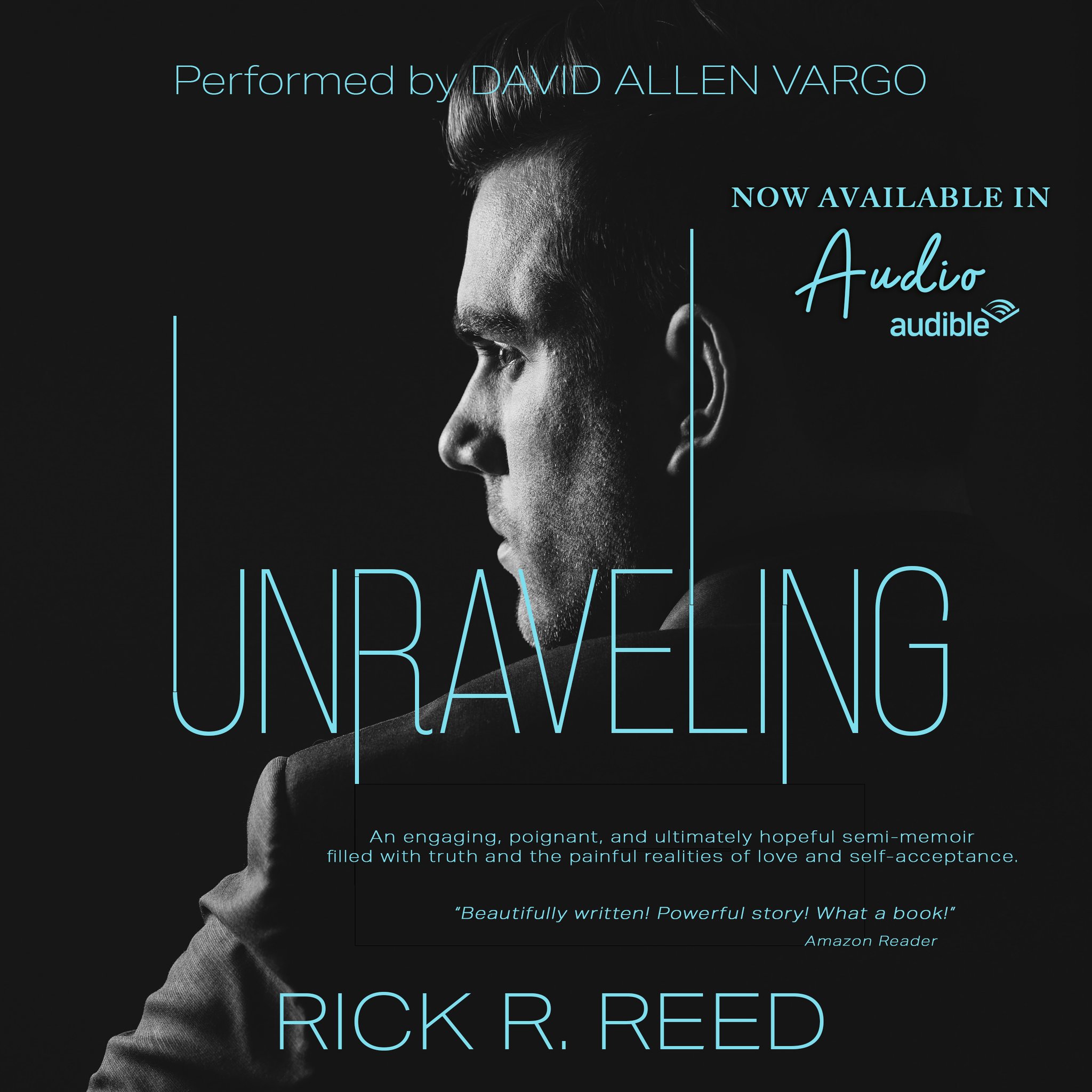
My Semi-Autobiographical Novel, UNRAVELING, is Now Out in Audiobook


Thrilled to announce David Allen Vargo, narrator extraordinaire, has lent his vocal and production talents to UNRAVELING, my most autobiographical work to date--it's essentially my #comingout story.

The #audiobook is available here.

ABOUT THE BOOK

Randy Kay has the perfect life with his beautiful wife and adorable son. But Randy's living a lie, untrue to himself and everyone who knows him. He's gay.

Marriage and fatherhood, which he thought could change him, have failed. He doubts if anyone can love him for who he really is--especially himself.

With his wife's blessing, he sets out to explore the gay world he's hidden from all his life.

John Walsh, a paramedic with the Chicago Fire Department, is comfortable in his own skin as a gay man, yet he can never find someone who shares his desire to create a real relationship, a true family.

When Randy and John first spy each other in Chicago's Boystown, all kinds of alarms go off--some of joy, others of deep-seated fear.

Randy and John must surmount multiple hurdles on the journey to a lasting, meaningful love. Will they succeed or will their chance at love go up in flames, destroyed by missed connections and a lack of self-acceptance?
READER REVIEW
This is such a heartfelt story and absolutely feels like it comes from a place of personal insight and experience. Growing up I knew men like Randy, who were married to women [often for decades], and eventually gathered their courage and risked everything to come out. I found this book to be incredibly honest in its depictions of how Randy struggles with his sexuality. How he navigates through his journey of living openly as a gay man. All while trying to maintain the relationship with his [ex] wife and discovering/forging new connections. The portrayals of the MCs and their perspectives read so genuinely and truly gives you a sense of the landscape of what life was like in the mid 1980's in Boystown Chicago while AIDS forever altered this community.

David Allen Vargo gives a stellar performance on the audio... there are quite a few musical inserts throughout - which was unusual for me - and ended up rather enjoying how they added to the narrative.
Prefer a more visual experience? Read the book. Ebook Paperback
The #audiobook is available here.


Tuesday, November 1, 2022

THE Q and My Inspiration


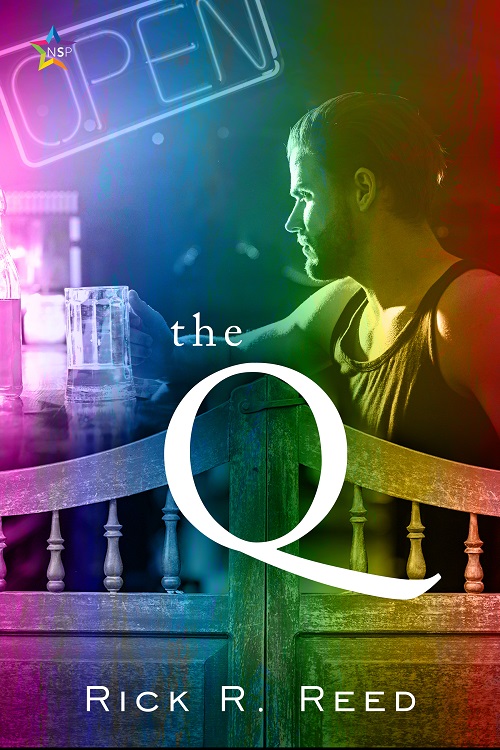
 The Q
is one of the books I'm most proud of. It also has the distinction of being the hardest to classify.

It chronicles one night at a small town gay bar in the foothills of the Appalachians (which is where I grew up) where all the locals gather. Through the course of one revelatory night, a memorable cast of characters come forward to share their stories—there’s heartbreak, missed connections, falling in love, falling out of love, making tough decisions, the exposure of secrets…and a lot more. 

There are a few books that inspired my desire to tell a story through individual glimpses into different lives over the course of one pivotal night. Spoon River Anthology, Winesburg, Ohio, and the Elizabeth Strout books, Olive Kitteridge and Olive, Again. All of these books basically weave short stories together to create a novel. I loved that idea and have had it in the back of my head for a while.

On a visit to my hometown, which is on the Ohio River and in the Appalachian foothills, I went with my sister one night to a dance club and casino in West Virginia. To draw people in to use the casino, the place has a live band for dancing every Saturday night and I watched all the regulars who come to dance and socialize and thought how they each have a story. And therein my idea for The Q was born. 

ABOUT THE BOOK


Step out for a Saturday night at The Q—the small town gay bar in Appalachia where the locals congregate. Whose secret love is revealed? What long-term relationship comes to a crossroad? What revelations come to light? The DJ mixes a soundtrack to inspire dancing, drinking, singing, and falling in (or out) of love.

This pivotal Saturday night at The Q is one its regulars will never forget. Lives irrevocably change. Laugh, shed a tear, and root for folks you’ll come to love and remember long after the last page.

BUY THE Q

Nine Star Press

Amazon Kindle 

Amazon Paperback 

Saturday, September 10, 2022

THE Q and Inspiration


 The Q
is one of the books I'm most proud of. It also has the distinction of being the hardest to classify.

It chronicles one night at a small town gay bar in the foothills of the Appalachians (which is where I grew up) where all the locals gather. Through the course of one revelatory night, a memorable cast of characters come forward to share their stories—there’s heartbreak, missed connections, falling in love, falling out of love, making tough decisions, the exposure of secrets…and a lot more. 

There are a few books that inspired my desire to tell a story through individual glimpses into different lives over the course of one pivotal night. Spoon River Anthology, Winesburg, Ohio, and the Elizabeth Strout books, Olive Kitteridge and Olive, Again. All of these books basically weave short stories together to create a novel. I loved that idea and have had it in the back of my head for a while.

On a visit to my hometown, which is on the Ohio River and in the Appalachian foothills, I went with my sister one night to a dance club and casino in West Virginia. To draw people in to use the casino, the place has a live band for dancing every Saturday night and I watched all the regulars who come to dance and socialize and thought how they each have a story.

And therein my idea for The Q was born. 

ABOUT THE BOOK


Step out for a Saturday night at The Q—the small town gay bar in Appalachia where the locals congregate. Whose secret love is revealed? What long-term relationship comes to a crossroad? What revelations come to light? The DJ mixes a soundtrack to inspire dancing, drinking, singing, and falling in (or out) of love.

This pivotal Saturday night at The Q is one its regulars will never forget. Lives irrevocably change. Laugh, shed a tear, and root for folks you’ll come to love and remember long after the last page.

BUY THE Q

Nine Star Press

Amazon Kindle 

Amazon Paperback 

Friday, August 19, 2022

My Most Autobiographical Novel Coming to Audiobook UNRAVELING


Thrilled to announce that David Allen Vargo will once again give voice to one of my works, UNRAVELING, which is my most autobiographical work to date--it's essentially my #comingout story.

The #audiobook will be available in November!

Can't wait? Read the book now: https://www.amazon.com/Unraveling-Rick-R.../dp/B083D7S8X2 #ownvoices #LGBTQ #amwriting

ABOUT THE BOOK

Randy Kay has the perfect life with his beautiful wife and adorable son. But Randy's living a lie, untrue to himself and everyone who knows him. He's gay.

Marriage and fatherhood, which he thought could change him, have failed. He doubts if anyone can love him for who he really is--especially himself.

With his wife's blessing, he sets out to explore the gay world he's hidden from all his life.

John Walsh, a paramedic with the Chicago Fire Department, is comfortable in his own skin as a gay man, yet he can never find someone who shares his desire to create a real relationship, a true family.

When Randy and John first spy each other in Chicago's Boystown, all kinds of alarms go off--some of joy, others of deep-seated fear.

Randy and John must surmount multiple hurdles on the journey to a lasting, meaningful love. Will they succeed or will their chance at love go up in flames, destroyed by missed connections and a lack of self-acceptance?

Tuesday, January 4, 2022

What Inspired Me to Write THE Q


 The Q
is one of the books I'm most proud of. It also has the distinction of being the hardest to classify.

It chronicles one night at a small town gay bar in the foothills of the Appalachians (which is where I grew up) where all the locals gather. Through the course of one revelatory night, a memorable cast of characters come forward to share their stories—there’s heartbreak, missed connections, falling in love, falling out of love, making tough decisions, the exposure of secrets…and a lot more. 

There are a few books that inspired my desire to tell a story through individual glimpses into different lives over the course of one pivotal night. Spoon River Anthology, Winesburg, Ohio, and the Elizabeth Strout books, Olive Kitteridge and Olive, Again. All of these books basically weave short stories together to create a novel. I loved that idea and have had it in the back of my head for a while.

On a visit to my hometown, which is on the Ohio River and in the Appalachian foothills, I went with my sister one night to a dance club and casino in West Virginia. To draw people in to use the casino, the place has a live band for dancing every Saturday night and I watched all the regulars who come to dance and socialize and thought how they each have a story. And therein my idea for The Q was born. 

ABOUT THE BOOK


Step out for a Saturday night at The Q—the small town gay bar in Appalachia where the locals congregate. Whose secret love is revealed? What long-term relationship comes to a crossroad? What revelations come to light? The DJ mixes a soundtrack to inspire dancing, drinking, singing, and falling in (or out) of love.

This pivotal Saturday night at The Q is one its regulars will never forget. Lives irrevocably change. Laugh, shed a tear, and root for folks you’ll come to love and remember long after the last page.

BUY THE Q

Nine Star Press

Amazon Kindle 

Amazon Paperback 

Friday, July 16, 2021

The Wizard of Oz and Coming Out

My senior year of high school, back in East Liverpool, Ohio, my school put on The Wizard of Oz as the spring musical. It was a kitschy mix of the original with some songs from The Wiz thrown in to make our version unique and hip.

Since I have always loved The Wizard of Oz (clue #1 that I might have been gay), I had to audition. For the singing part of my audition, I sang "Sentimental Journey", an odd choice for a small town high school boy (clue #2).

For my stellar singing talents, I was cast in the farmer's chorus (swaying in the background as Dorothy sang "Over the Rainbow"); as a ghost in the witch's castle (I got to come through the audience in a sheet, dancing); and as one of the witch's generals.

This last part is what caused me to have a revelation. There were fifteen of us generals and we all said the same line to the single private in the witch's army. If we wanted to stand out, we had to do something to differentiate ourselves. I chose to do a nasal voice (thinking that's all it was). When my fellow cast members heard the voice, they cracked up. It took me a while to realize what they found so hilarious was that they thought I was doing a gay general.

Oh, a gay general? Sure, that was what I had in mind.

Not really.

But now I wonder if it was the subconscious, closeted gay boy yearning to be recognized for who he was coming out. Even though I hadn't intended to be a gay general, I went with it and added a lace hanky to my sleeve and a sashay to my march that was so effeminate it would make Paul Lynde look butch. It was probably a horrible gay Uncle Tom moment, offensive, but I plead ignorance--on a lot of counts.

The audience loved it; they roared.

Now I can look back at that thespian moment in my life and see it for what it was--an unconscious moment of coming out, a moment where I was recognized for who I really was, recognized and laughed at, yes, but appreciated all the same. And remembered. And, in an odd way, accepted--because I was entertaining. Bringing what I so loathed about myself and was desperate to keep hidden to the forefront was, now that I look back, revealing myself.

And the best part was, I was not hurt for it.

Wednesday, June 16, 2021

Inspiration and THE Q


 The Q
is one of the books I'm most proud of. It also has the distinction of being the hardest to classify.

It chronicles one night at a small town gay bar in the foothills of the Appalachians (which is where I grew up) where all the locals gather. Through the course of one revelatory night, a memorable cast of characters come forward to share their stories—there’s heartbreak, missed connections, falling in love, falling out of love, making tough decisions, the exposure of secrets…and a lot more. 

There are a few books that inspired my desire to tell a story through individual glimpses into different lives over the course of one pivotal night. Spoon River Anthology, Winesburg, Ohio, and the Elizabeth Strout books, Olive Kitteridge and Olive, Again. All of these books basically weave short stories together to create a novel. I loved that idea and have had it in the back of my head for a while.

On a visit to my hometown, which is on the Ohio River and in the Appalachian foothills, I went with my sister one night to a dance club and casino in West Virginia. To draw people in to use the casino, the place has a live band for dancing every Saturday night and I watched all the regulars who come to dance and socialize and thought how they each have a story. And therein my idea for The Q was born. 

ABOUT THE BOOK


Step out for a Saturday night at The Q—the small town gay bar in Appalachia where the locals congregate. Whose secret love is revealed? What long-term relationship comes to a crossroad? What revelations come to light? The DJ mixes a soundtrack to inspire dancing, drinking, singing, and falling in (or out) of love.

This pivotal Saturday night at The Q is one its regulars will never forget. Lives irrevocably change. Laugh, shed a tear, and root for folks you’ll come to love and remember long after the last page.

BUY THE Q

Nine Star Press

Amazon Kindle 

Amazon Paperback 

Tuesday, June 15, 2021

NEW AND NOTABLE: The Mayor of Oak Street by Vincent Meis


Title: The Mayor of Oak Street

Author: Vincent Traughber Meis

Publisher: NineStar Press

Release Date: 06/14/2021

Heat Level: 2 - Fade to Black Sex

Pairing: Male/Male

Length: 88400

Genre: Contemporary, LGBTQIA+, age-gap, coming-of-age, coming out, college, political, friends to lovers, period piece, reunited

Add to Goodreads


Description

In the 1960s, Midwestern boy and Boy Scout, Nathan delivers newspapers and mows lawns. Nathan uses his cover to move about yards and sneak into the homes of his neighbors, uncovering their secrets.

In high school, one of the local misfits introduces him to diet pills, which help him overcome his shyness. In an amphetamine high, he meets Cindy, who he hopes will steer him along the “morally straight” path of the Boy Scout Oath he swore to.

Nathan is infatuated with a young doctor down the street, Nicholas (Dr. B), who embodies all the things his mother would love him to be. On one of his secret forays in Dr. B’s house, he hides in a closet and witnesses his idol having sex with man while the wife is out of town. Dr. B’s affair leads to tragedy, forcing the doctor to leave town.
At college in New Orleans, Nathan meets a group of rebels and expands his drug use. Marc, a bisexual Cajun charmer becomes Nathan’s first male sexual experience, but promptly leaves town.

Nathan has a chance encounter with Dr. B, who has moved to New Orleans. Dr. B is in a relationship, but still closeted. Frustrated by Dr. B’s cool reaction, Nathan goes on a six-month binge of amphetamines and anonymous sex. On one night of debauchery, he overdoses and ends up in the emergency ward.

Nathan’s near death rallies Dr. B and Nathan’s other friends to force him into rehab. On the way home from work, Nathan witnesses the gruesome aftermath of the 1973 Up Stairs Lounge fire that devastated the gay population of New Orleans. As a result of the fire, Dr. B’s live-in boyfriend leaves town, freeing Dr. B to explore his feelings for Nathan.

Excerpt

The Mayor of Oak Street
Vincent Traughber Meis © 2021
All Rights Reserved

The Sangamon flows muddy and rank through the corn and soybean fields of central Illinois, giving its name to my city and the lake it fills on the south side before continuing its meander west. One of its tributaries, the even lazier and muddier Harold’s Creek, ran practically up to my back door in its own journey through the woods behind the homes on Oak Street.

The afternoon sun filtered through the tall trees, warming my shoulders as I walked along the creek, imagining building a raft like I had seen my brother and his friends do a few years before. I would ride it down the creek to the Sangamon and into the Illinois, eventually reaching the Mississippi. The Mississippi would take me to New Orleans, a city memorialized in song, literature, and film as a place of wonder. It wasn’t that I needed to run away like Huckleberry Finn. I hadn’t yet learned to hate everything the Sangamon gave its name to. It was a boy’s fantasy brought on by the heat of summer and the mesmerizingly sluggish flow of water.

I heard a branch snap deep in the woods. I often saw hobos from the nearby Wabash Line wandering in the woods, and my mother told me I needed to avoid them, but I sometimes watched them from behind a clump of bushes. My eyes darted around the area and saw nothing. I glanced at my watch. Time to go. For most kids, these were the carefree days of summer, but I had things to do. From the creek, I walked up the hill, through our backyard, and out to the street.

Mrs. Sloan’s heavy oak door hung wide open while a screen kept the swarms of late summer flies and mosquitoes at bay. I put my face to the mesh in what felt like an invasion of her privacy, causing me to tingle from the top of my head down to my big toes.

“Hello? Mrs. Sloan?” I shouted into the dim interior of the hall.

No answer.

I opened the screen door haltingly and stepped inside. The door creaked shut, sounding painful in the silence of the house. I took a step, and then another. My legs shook. I peered to the right into the living room and left into the dining room. A force had taken control of me and pushed me on, my sneakers barely touching the carpet.

I went as far as the kitchen, passing two empty bedrooms on the way. Her purse sat on the yellow chrome Formica kitchen table, the keys to her Oldsmobile right next to it. Out the kitchen window, I searched for her floppy straw hat in the sunny backyard. She was neither in the garden where she often tended her vegetables nor in the lawn chair where she sometimes sat, large sunglasses on her nose and a cocktail in hand. I took note the lawn needed mowing.

Nylons hung over the bathroom shower curtain rod, hypnotically swaying in the breeze from the open window. Though we called her Mrs. Sloan, I had never heard of a Mr. Sloan. My father once complained about entering the bathroom and finding my mother’s nylons drying in plain sight. I wondered if Mrs. Sloan was sad living alone or happy she had the freedom to do what she wanted.

I should have been scared of her coming home and finding me lurking in her house, but a stronger force blocked the fear, a compelling energy moving my mind and body, making me feel impervious to danger. I continued down the hall to the living room, stopping to gaze at each of three framed needlepoint messages: “There’s nothing to fear but fear itself,” “A cheery smile makes life worthwhile,” and “You belong among the wildflowers.”

I had come to Mrs. Sloan’s door in my rounds, collecting for my paper route. She was a month behind in her payments. And I rationalized my invasion of her home out of concern for her welfare. My mother once said she wouldn’t be surprised to find her passed out drunk on the front lawn one day. My brother in high school sometimes came home from a night of drinking with his buddies and would collapse face down on his bed in our shared room without removing his clothes or shoes. One time, he ended up on the floor. Perhaps Mrs. Sloan had fallen like my brother. Perhaps she had fallen asleep in the bath and was at risk of drowning like I had seen on a television program.

I spent a few more minutes in the house before exiting through the front door into the calm and quiet on Oak Street. I continued up the block to do the rest of the collections. That night I drew a floor plan of her home, noting doors and windows. My brother called me a weirdo when the first thing I looked at in the Sunday paper was the page with the floor plan of a new house on the market while he went for the sports section, my father the news, and my mother the book reviews. I also scribbled notes about Mrs. Sloan’s house: the color and shape of her purse, the black-and-white photo of a somber older couple in the living room, the buff-colored nylons, the approximately twelve-inch cross hanging over her bed, and the needlepoint messages.

Before I entered my teenage years, I would know my way in and out of most every house on the block without being discovered. It was the Midwest. It was the ‘60s. Crime happened elsewhere. In addition to delivering papers, I mowed lawns. I could cross barriers, move within fences, and befriend dogs. Access. Getting inside the house was usually the easy part.

Everybody told me my paper route and lawn-mowing jobs would be good experience though I had no idea how much I would learn about myself, about others, about life, the good and the bad. I could assume the face of the upstanding neighborhood boy, appearing at their doors to collect subscription payments, smiling and making small talk while below the surface I was another person, motivated by desires they would never understand.

The second time I entered a home was as spontaneous as the first. It was the Pruitts’. While mowing the front lawn, I noticed Mrs. Pruitt lock the front door, take her two identically dressed little girls by the hand, jump into their Ford station wagon, and drive off. When I got around to the back of the house, I spotted the kitchen door standing open, beckoning me. I turned off the mower so I would hear if the car returned. I went into the kitchen. My mother would die rather than let our kitchen fall into such disorder; the sink filled with dirty dishes, and the kitchen table covered with open schoolbooks and scattered papers.

A half-full milk carton sat on the counter. I opened the fridge and saw a whole shelf of soda pop. I took an orange Crush and drank it as I did a quick tour of the house. Not much interesting. The rest of the house was as messy as the kitchen. I finished the soda outside, threw the bottle in the trashcan, and finished mowing the lawn. Before I went to bed that night, I drew a floor plan of their three-bedroom and put it in a folder with Mrs. Sloan’s.

I thought of these intrusions as accidents, isolated incidents that wouldn’t be repeated. But images of those escapades kept dancing through my head, enticing me to do it again. The rush of danger, the real possibility I might be caught, was like a drug. At the time I was still ignorant about drugs and addictions, but my body clearly knew sensations it wanted to revisit. I managed to stave off my urges for a few months. I turned twelve over the summer, and several of my customers who had heard it was my birthday tacked on a bit extra to their payments.

Lawn-mowing season came to an end as the weather turned cold, and we had our first snowfall. Soon after, I started receiving calls about paper holds for the Thanksgiving holidays. To me, they might as well have been invitations. I prayed it didn’t snow as the soft whiteness would show the hard dirty prints of my boots, a trail of my activities. I had to start thinking about such things: tracks I might leave, who in the neighborhood tended to snoop out their windows, or how often people left doors unlocked, windows open.

I made a point of being friendly with the dogs on my street as I knew my extracurricular activities at houses with animals could be a problem. The Jackmans had a golden retriever. I’d received notice to put their paper on hold for five days, making me guess they weren’t going to leave the dog in the house for that length of time.

When I did my collections the week before Thanksgiving, I casually mentioned to Mrs. Jackman that I had received the hold notice. People loved to give out information they didn’t have to. She revealed they were going to their lake house in Arkansas. Butch was curled up at her feet. He raised his head as she took a ten out of her wallet and gave it to me. She told me to keep the change, and I thanked her profusely while I tore off her receipt.

I reached down to pet the dog. “I guess Butch is going to get a vacation too.”

“Oh, yeah. He loves it down there.”

Bingo, I was in. After our Thanksgiving meal, Dad and my brother watched the football game on TV while Mom cleaned up. I went to my room, saying I was going to read. Nobody thought it was odd. In my family, everybody did pretty much what he or she wanted. Normally, after a Thanksgiving meal, Dad and my brother passed out in front of the TV, and Mom curled up in a chair to read after cleaning up the kitchen. They had all had a lot of wine at dinner, including David, who my parents allowed to drink though he was only sixteen, something about him learning to drink responsibly at home keeping him from being irresponsible when he went out. I wasn’t sure that was working.

Purchase

NineStar Press | Books2Read

Meet the Author

Vincent Traughber Meis started writing plays as a child in the Midwest and cajoled his sisters to act in performing them for neighbors. In high school, one of his short stories won a local contest sponsored by the newspaper. After graduating from college, he worked on a number of short stories and began his first novel. In the 1980’s and 90’s he published a number of pieces, mostly travel articles in publications such as, The Advocate, LA Weekly, In Style, and Our World. His travels have inspired his five novels, all set at least partially in foreign countries: Eddie’s Desert Rose (2011), Tio Jorge (2012), and Down in Cuba (2013), Deluge (2016) and Four Calling Burds (2019). Tio Jorge received a Rainbow Award in the category of Bisexual Fiction in 2012. Down in Cuba received two Rainbow Awards in 2013. Recently stories have been published in three collections: WITH:New Gay Fiction, Best Gay Erotica Vol 1 and Best Gay Erotica Vol 4. He lives in San Leandro, CA with his husband.

Website | Facebook | Twitter | Instagram

Giveaway

a Rafflecopter giveaway

  Blog Button 2

Thursday, April 1, 2021

Writing from Experience: BIG LOVE


Big Love contains three of characters I think I’ve fallen in love more than any characters in any book I’ve ever written. I think that favoritism comes from:
  1. My main characters, two high-school school teachers and a pivotal student, are capable of inspiring deep emotion but at the same time, they’re flawed human beings with whom I think we can all identify to an extent.
  2. They’re all, at least in part, me at different stages of my life and my coming out process. Big Love is not autobiographical, but I believe every writer leaves a personal stamp on each of his or her characters (and they on him!).
So, in this post, I want to get you up-close-and-personal with three brave men whom I believe you'll love as much as I do and tell you about their relationship with me and with the delicate process of coming out.

 Our first character is Dane Bernard. Dane’s a little older than your average character in a gay romance, in his forties, and living a very settled life as a high school teacher, with a wife and two adolescent children, a boy and a girl. To look at him, you’d think he had the perfect, settled life. The American dream, the source of contentment. But look closer and you’ll see a man who’s hiding his most essential self under a mound of shame and secrets. See, Dane is in the closet and thinks that, because of the people he’d hurt if he were honest about his orientation, he can never come out of that closet.

Circumstances unlock the closet door, tragic circumstances (as you’ll see when you read Big Love), but nonetheless Dane has no longer got a reason to keep his gay self a secret. Tentatively, he begins to come out. The events in the book force him to come out quicker than he might have wanted or felt comfortable with, but once he’s out and on the other side, he finds the air there is very much worth breathing and very liberating.

I was Dane at one point in my life. As far as I knew, no one knew I was gay. I was married to a woman, had a wonderful little boy, and was living the perfect suburban lifestyle. No one could see that I wore a mask every day and in my darkest hours felt that no one, not friend or family knew who I was. And if they did, my greatest horror was that they would no longer love me. Like Dane, I eventually emerged from my closet and as it was for Dane, it wasn’t always easy. Like Dane did, I found more people stuck by me and still loved me than I thought would, but some did fall away. So I understood Dane’s pain, his anguish and secrets when I was writing. I also understood how a gay man could successfully function—at least for a time and relatively speaking—as a husband and dad. But most of all, I understood and brought to you, dear reader, the joy Dane eventually found in loving himself and that one special man who comes into his life right when he needed him most.

Our second character is Seth Wolcott. Seth’s what I consider the perfectly evolved gay man. Although he’s not perfect, by any means! He’s still smarting from a recent breakup and he’s prone to falling on his ass, in more ways than one (as you’ll see when you read Big Love). But I said Seth was perfectly evolved and that’s because he’s my counterpoint to the other two characters in the book, Dane Bernard and Truman Reid, who, despite a vast age difference, are both dealing with coming out for the first time.

Seth is the character I wrote who demonstrates what it can be like when you love yourself and live your life openly and honestly. With Dane, who’s facing the potential of his first romantic involvement with another man, Seth is not only an object of affection and desire, he’s a role model—one he can and does fall in love with. For Truman, our bullied freshman, Seth is somebody he can look up to and see that by embracing who you are with no shame, you can lead a normal and happy life.

Like Dane, our married, closeted man, I think I also have aspects of Seth. Like Seth, I’m now pretty settled in my gay existence. I’m actually neither proud nor ashamed. I just am. It’s kind of like my height or the fact that I have green eyes. It’s no big deal and yet it’s everything. It’s simply a fact of life.

So it is for Seth.

So it is for me.

Our third character is Truman Reid. It’s no accident that Truman and I share the same last name (albeit spelled differently). My teenage self and Truman have in common a lot of the same heartache growing up. It’s also no accident that Truman shares a first name of a celebrated gay author, Truman Capote. See the picture of the young Capote? In my head, my Truman looks very much like the beautiful young man Capote was at the time his first book, Other Voices, Other Rooms, came out.

Truman is the character I love most in the book. He’s a mess in some ways and in others, one of the most evolved characters. Like Truman at the start of the book, I endured teasing and bullying throughout most of my junior high and high school years. I know his pain. And when you read the opening scene of the book at the first-day-of-school-assembly and how Truman is terrorized, know that I was recreating something that happened to me when I was Truman’s age.

The difference between Truman and me is that I took a lot longer to deal with my shame and conflict over who I was than he did. I didn’t have his teachers, Dane Bernard and Seth Wolcott, to help me accept myself. I didn’t have Truman’s wonderful mom, Patsy, who said to him:

  “God made you just the way you are, honey. Beautiful. And if you’re one of his creations, there’s nothing wrong in who you are. You just hold your head up and be proud.” 

Although make no mistake—I did have a wonderful mom. She just wasn’t as evolved in her thinking as the fiercely loving Patsy. I suspect—and hope—that you will love Truman as much as I do. And I hope that you will help cheer him on his journey from being a bullied victim to an out-and-proud kid who loves himself fiercely and accepts no less from others.

BLURB
Teacher Dane Bernard is a gentle giant, loved by all at Summitville High School. He has a beautiful wife, two kids, and an easy rapport with staff and students alike. But Dane has a secret, one he expects to keep hidden for the rest of his life—he’s gay. But when he loses his wife, Dane finally confronts his attraction to men.

And a new teacher, Seth Wolcott, immediately catches his eye. Seth himself is starting over, licking his wounds from a breakup. The last thing Seth wants is another relationship—but when he spies Dane on his first day at Summitville High, his attraction is immediate and electric.

As the two men enter into a dance of discovery and new love, they’re called upon to come to the aid of bullied gay student Truman Reid. Truman is out and proud, which not everyone at his small-town high school approves of. As the two men work to help Truman ignore the bullies and love himself without reservation, they all learn life-changing lessons about coming out, coming to terms, acceptance, heartbreak, and falling in love.

BUY 

Monday, February 15, 2021

What Inspired Me to Write THE Q


 The Q
is one of the books I'm most proud of. It also has the distinction of being the hardest to classify.

It chronicles one night at a small town gay bar in the foothills of the Appalachians (which is where I grew up) where all the locals gather. Through the course of one revelatory night, a memorable cast of characters come forward to share their stories—there’s heartbreak, missed connections, falling in love, falling out of love, making tough decisions, the exposure of secrets…and a lot more. 

There are a few books that inspired my desire to tell a story through individual glimpses into different lives over the course of one pivotal night. Spoon River Anthology, Winesburg, Ohio, and the Elizabeth Strout books, Olive Kitteridge and Olive, Again. All of these books basically weave short stories together to create a novel. I loved that idea and have had it in the back of my head for a while.

On a visit to my hometown, which is on the Ohio River and in the Appalachian foothills, I went with my sister one night to a dance club and casino in West Virginia. To draw people in to use the casino, the place has a live band for dancing every Saturday night and I watched all the regulars who come to dance and socialize and thought how they each have a story. And therein my idea for The Q was born. 

ABOUT THE BOOK


Step out for a Saturday night at The Q—the small town gay bar in Appalachia where the locals congregate. Whose secret love is revealed? What long-term relationship comes to a crossroad? What revelations come to light? The DJ mixes a soundtrack to inspire dancing, drinking, singing, and falling in (or out) of love.

This pivotal Saturday night at The Q is one its regulars will never forget. Lives irrevocably change. Laugh, shed a tear, and root for folks you’ll come to love and remember long after the last page.

BUY THE Q

Nine Star Press

Amazon Kindle 

Amazon Paperback 

Tuesday, February 2, 2021

NEW RELEASE! Step out for a Night at The Q by Rick R. Reed


Genre: Contemporary, LGBTQIA+, Contemporary, Ace, Bi, Gay, Lesbian, Family drama, bartenders, blue collar, coming-of-age, coming out, hurt/comfort, soulmates, open relationship, #ownvoices, over 40, reunited

Add to Goodreads

About the Book

Step out for a Saturday night at The Q—the small town gay bar in Appalachia where the locals congregate. Whose secret love is revealed? What long-term relationship comes to a crossroad? What revelations come to light? The DJ mixes a soundtrack to inspire dancing, drinking, singing, and falling in (or out) of love.

This pivotal Saturday night at The Q is one its regulars will never forget. Lives irrevocably change. Laugh, shed a tear, and root for folks you’ll come to love and remember long after the last page.

Excerpt

The Q
Rick R. Reed © 2021
All Rights Reserved

Chapter One: Hey Bartender!

Mary Louise hated the term fag hag.

It was demoralizing, conjuring up an image of an older woman, heavyset, with too much makeup and hair that was too big. She would be sitting at home with her two cats, Will and Grace, drinking Cosmos alone and streaming Queer as Folk or Queer Eye while she waited for one of her gay male friends to call to shape and determine the extent of her social life. She’d maybe drink a little too much and laugh a little too loud. She’d play wingperson and watch wistfully from the sidelines as her cohorts paired off for an evening, a week, a month, or a lifetime. She’d tell her friends and family who’d never darkened the threshold of a gay bar that she liked going to them because she didn’t get hit on by predatory losers and she could let her hair down.

She knew the stereotype because for many years she’d been it—well, maybe not exactly, but close enough to make her cringe at the memory.

Sure, she still owned cats (or they her, far more likely), who were Siamese and not named Will and Grace, but Harry and Sally. Her hair had never been big and her idea of great TV was streaming the Golden Girls on Hulu. “Okay, so that’s a little gay,” she heard Sophia saying in the back of her mind. Her drinking taste leaned much more toward beer or a nice glass of whiskey, neat.

She’d broken free of being the wingwoman to the various gay men she befriended. She’d gotten rid of the idea that her happiness depended on a man, gay or otherwise.

She still laughed too loud and probably always would. One of her friends, Mort, delighted in acting out a scene with her from Who’s Afraid of Virginia Woolf when she let loose with one of her ear-splitting laughs. He’d accuse her of braying, and she’d respond, in her best Elizabeth Taylor, “I don’t bray,” and then command him to make her another gin and tonic. He always would comply and would sheepishly respond, “All right. You don’t bray.”

Mort had been gone since 1992, when AIDS took him at the tender age of twenty-eight. Mary Louise still missed him and kept a picture of the two of them, taken while on vacation in Provincetown, a year before Mort was diagnosed. She’d look at that photograph of the two of them, arms slung around each other on Commercial Street, and her eyes would well with tears, even though it had been close to thirty years since Mort had passed in an AIDS ward in a Pittsburgh hospital with only Mary Louise at his side. That loss still was tragic, not only because of Mort’s tender age, but because he was so alone. His partner, Nate, and his folks in Shippingport had abandoned him, the former claiming he couldn’t stand to see him this way and the latter voicing concerns that they might catch the virus. He was your son! She’d wanted to scream at the parents. He needed your arms around him. He needed you to see him. He was your lover! she’d say to Nate. His dying and death wasn’t about you and your fragile feelings.

Mary Louise hoped there was a special place in hell waiting for all three of them.

She’d watched many of her friends succumb to the virus before protease inhibitors came onto the scene, turning what was a death sentence into a somewhat manageable condition. She’d never stop mourning the loss of so many beautiful men.

When the fallout from all this was over, for all practical purposes, Mary Louise found herself bereft of friends. That’s when she decided to pack up and move back to her home town of Hopewell, where her mom and two sisters still lived. There was comfort in coming home to a place where her roots were deeply embedded, even if the area was blighted with poverty. It was still some of the most beautiful countryside Mary Louise could imagine.

Chicago had suddenly seemed too big and, at the same time, paradoxically empty. There were so many reminders—the Boystown strip along Halsted, the Baton Club on Clark, the Swedish restaurant Ann Sather next to the Belmont L stop—all of these places and so many more held more painful memories than she could count, even if they had the power to make her smile and laugh. She figured time and distance would transform the painful memories into joyous ones.

But each recollection of a night of drunken revelry out with her boys or a bleary-eyed brunch the morning after, were a hot touch to her grief, a pain that may have softened, but never went away. Mary Louise was grateful—she’d never willingly give up the hurt. She wanted to hold onto these memories of her boys forever. Despite the fact she was a bit of a stereotype and fit the fag hag profile pretty much to a T, the days and nights in Chicago with her circle of gay friends had been some of the happiest days of her life. And she didn’t even realize it at the time. Wasn’t that always the way?

Hopewell brought a sense of quiet, with its looming tree-covered hills—the foothills of the Appalachians and its position on a winding curve of the mud-brown Ohio River.

Moving back had simplified her life, even if it drained a lot of the bustle and color from it. In Chicago, she never walked alone; the streets, no matter the time of day or night, were always busy. In Hopewell, she could wander and never bump into anyone.

It was her mom, at eighty-six, who needed her help with things like shopping, cooking, running errands, and chauffeuring her to doctor’s appointments. Old Trudy, as she and her sisters referred to her behind her back, refused to move in with one of them, or God forbid, the assisted living facility up the road in Newell. Trudy always said, “I live alone because I like it. They say money is the root of all evil, but the truth is it’s people.”

Mom got by with her girls. And Mary Louise, even as she sometimes got nostalgic for the bright lights and hustle of the big city, knew she was doing the right thing. She’d experienced the Chicago skyline on a clear night, Lake Michigan’s blue/aqua/gray waves crashing against the shore, and the vast diversity of people living on its shore, and no one could ever take those memories away.

Even if she was feisty, clearheaded, and mobile, no one knew how much longer Mom would be with them.

At the Q, Mary Louise still could eye the boys, flirt with them, tease them, and play matchmaker in her role as bartender.

Right now, she stood behind the bar in a pair of unflattering black orthopedic shoes. Once upon a time, Mary Louise adored a pair of CFM (come-fuck-me) pumps with four-inch spikes. Oh, how great they made her legs look back in the day! Not that many noticed in hangouts like Sidetrack or Roscoe’s.

Now, midfifties, she needed to be comfortable when she was on her feet all night. Her smile depended on it, and thus her tips.

Currently, she waited for the doors to open, which would happen in about an hour. She was blissfully alone. Well, maybe blissful wasn’t the right word because all the lights were on as she prepped citrus and olives for drinks, washed glasses, polished the bar, and made sure the bottles behind it were stocked and ready to go.

The overhead lights cruelly stole most of the limited magic the Q possessed. And that was too bad. One of Mary Louise’s favorite characters was the tragic Blanche Dubois, from Tennessee Williams’s A Streetcar Named Desire and one of her favorite lines from the show was Blanche’s opinion that she didn’t want realism, she wanted magic. The shadows, soft lighting, and even the disco ball above the dance floor lent a kind of alchemy to the place, transforming it from run down to a setting where anything could happen, where hope lived.

Just before the doors opened, though, the joint looked tired and sad (as Mary Louise herself often felt). The cinder block walls, painted black, possessed a menacing air, like a dungeon—and not a fun one! The concrete floor, stained, showed its grit and the cracks that ran through it. Even the single long rectangle window at the front appeared dusty. Night pressed in on the tinted glass like a monster, hungry for admittance.

Stop it! Now you’re just getting crazy. Mary Louise finished her prep work and allowed herself a moment to sit on the stool she kept behind the bar. It might be her last chance for several hours to relax, if only for a few minutes. She dreaded the coming ache of her feet at evening’s end, orthopedic shoes or not.

But, oh, how she looked forward to seeing everyone! Every Saturday night was a party, and she was the hostess with the mostess.

Despite how some of the regulars could try her patience down to its last reserves, it brought her joy to watch the revelers, to serve them, to offer oblivion in a glass or a bottle. Even though her dancing days, mostly, were well behind her, she loved seeing everyone out there, bodies gyrating and spinning. Some were great, others awkward, others downright embarrassing, but to witness them cut loose after a long week was a thing of beauty, no matter their level of expertise or coordination. She especially loved some of the older patrons, who would bring their shakers of corn starch in to sprinkle on the floor, making it easier to slip and slide to the pulsing dance beat.

Gracie, Rose, and Liz were a lesbian trio that she particularly adored. Even though she’d never had much conversation with them, other than to take their drink orders, the three seemed so well-adjusted and happy, despite never once pairing off, as half the bar expected them to do. And Mary Louise, who considered herself a pretty astute observer of human nature, could tell from a mile away that Gracie was in love with Rose. So obvious! Why couldn’t Rose see it? Or did she simply not want to? Mary Louise had wondered if maybe they were a throuple, but everyone she talked to about that particular suspicion shot in down. “They’re best friends, that’s all.”

She turned as the door squeaked open. There stood Billy Breedlove, her barback and bouncer when needed (not often) in his usual garb—black combat boots, black cargo pants, and a black T-shirt that appeared to be painted on his beefy physique—looking worried.

Mary Louise was taken a little aback. For one, her breath always did a little catch in her throat when she saw him, accompanied by a skip of a heartbeat. He was a beautiful man with his muscles, his bleached-blond buzz cut, and the tattoo sleeves, wildly colorful butterflies and birds that ran down both arms. The fact that he was unattainable made him even more attractive.

And then she’d chide herself. That young man is a good twenty years younger than you, if not more. Cougar. Shame on you.

He’d once told her, when the doors were closed and the lights back on, as they concluded the evening’s business and everyone had headed home, that he was a volcel.

“What the hell’s that?” Mary Louise had asked, mystified.

“I’m an ace,” he’d said, only confusing her further.

“Voluntary celibate, asexual,” Billy told her. “I’m better off without the nasty, you know. I just don’t want it. It would be hard, no pun intended, if it didn’t work for me. But honestly, I never think about sex. Call me weird, but it works for me. And that’s all that matters.”

On hearing those words, she laughed, disbelieving. She fully expected him to laugh, too, maybe slug her in the arm for being gullible. When he didn’t join her in her laughter, her heart broke for him because she knew he wasn’t kidding. She’d pined with unrequited love for gay men most of her adult life and here was one who was most likely straight. And wouldn’t you know it? He’d sworn off sex.

The world was a hopeless place.

He’s too young for you anyway.

The second reason Mary Louise was taken aback was from the worry stamped on Billy’s face.

“There’s been an accident,” he called over. “It’s bad.”

“Oh no.” Mary Louise stood. “What happened?”

Purchase

NineStar Press | Books2Read


Facebook | Twitter | Instagram

Giveaway

a Rafflecopter giveaway

  Blog Button 2

Thursday, June 4, 2020

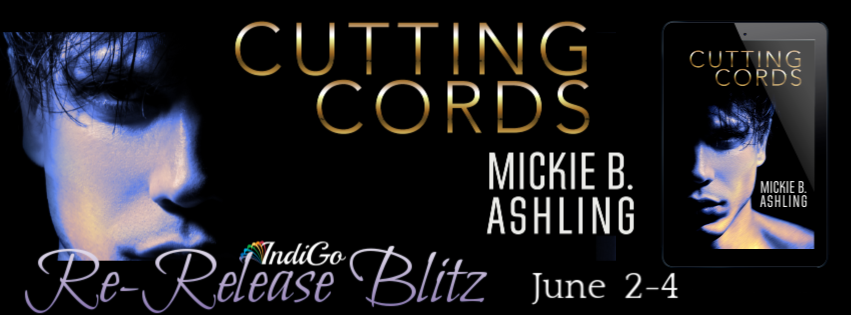
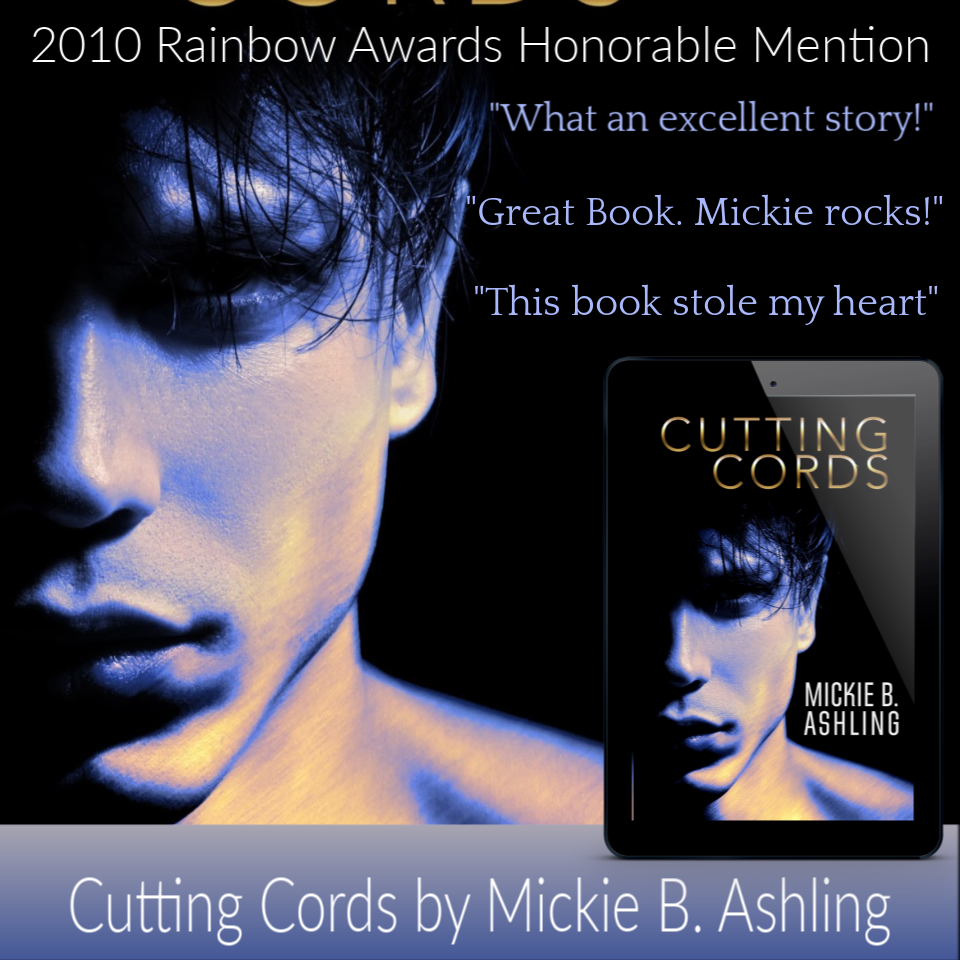
NEW and NOTABLE: Cutting Cords by Mickie B. Ashling


Title: Cutting Cords
Series: Cutting Cords Series, Book One
Author: Mickie B. Ashling
Publisher: Self-Published
Release Date: 6/2/20
Heat Level: 4 - Lots of Sex
Pairing: Male/Male
Length: 63,525
Genre: Romance, Contemporary, bisexual, hurt-comfort, coming out, disability, cutting

Add to Goodreads

Synopsis


Sloan Driscoll is a talented graphic artist but compared to his father and younger brother—all star athletes—he’s never measured up. A lifetime of insecurity leads him down dark paths.

His childhood friend, Cole Fujiwara, a former major league pitcher, embodies all of Sloan’s hidden aspirations. Cole is physically fit, attractive, intelligent, and successful. Seemingly perfect.

When Sloan shows up on Cole’s NYC doorstep needing a place to stay, their reunion is anything but simple. Sloan has always been drawn to Cole, but now, even though there’s a girlfriend on the periphery, the attraction seems mutual.

One night, inhibitions slip away. But both men are hiding a multitude of secrets. Salvation could be found within each other’s arms. But only if they let it.

Cutting Cords is the first book in the Cutting Cords Series previously published by Dreamspinner Press. This series must be read in order and all four titles will be available by September 2020. HEA guaranteed at series end.


Content Warning: contains body image issues, drug use, cutting, and some BDSM elements.

Excerpt


Cutting Cords
Mickie B. Ashling © 2020
All Rights Reserved

The doors of the plane were shut; the engines revved and ready to go. I leaned back and plugged in my earphones, increasing the volume so I could hear nothing but Queen blaring out Bohemian Rhapsody. I loved their music, stage presence, and style. One summer, I even made the attempt to dress and talk like Freddie Mercury. It wasn’t hard, since we had the same body type, not one ounce of fat anywhere. My little game was met with disapproval, so my outrageous persona went back into a compartment in my brain, along with all the other shocking thoughts that resided there.

The plane finally took off, almost in sync with Freddie’s falsetto blaring in my ears. I removed my earplugs and unfastened the seat belt when the captain turned off the sign. It was time to go to the restroom and take care of business.

The light in the tiny bathroom cast a yellowish shade on my normally pale face. I stared at the mirror, trying to see if I looked any different since my haircut and my father’s attempts to make me look respectable. Everything appeared the same; my hair was still a boring brown, my eyes an unremarkable shade of gray. My mouth was a bit too full and girly for Dad’s taste, but there wasn’t a damn thing he could do about it. I wondered how long it would take for my hair to grow out again. I hated the feel of cold air against my neck, although my tattoo was now clearly visible, the Queen logo, a testament to my devotion.

I started to strip, undoing the belt buckle and pushing down my jeans, past the ugly web of scars on my thighs. They were a constant reminder of my inner turmoil, a grim display in varying shades of hair-raising red. I stepped out of my pants and boxers simultaneously, leaving them bunched at my feet. Next off were the tight white briefs that had served its purpose—holding the sandwich bag with my stash in its hiding place near my crotch. I dumped the briefs into the wastebasket and pulled my jeans and boxers back on.

I opened the plastic baggy and inhaled the pungent aroma of the high-grade weed, wishing I had the guts to light up, but I knew my impulse would activate the smoke alarms and they’d be pounding on the door within minutes. So I popped a Xanax instead, a poor substitute, but certainly better than nothing.

I spent the rest of the flight in a hazy fog. Thanks to my age and the money in my pocket, I was able to buy a few drinks to add to my drug-induced high. I passed on the food, shaking my head at the flight attendant, but asked for more peanuts instead. I could almost hear my father’s voice telling me to eat and not skip meals or I’d never gain weight, but I wasn’t buying into his plan anymore. No amount of sustenance had ever worked to give me the kind of body I craved, so any time I was on my own, I ate whatever I wanted.

I knew I wasn’t in California anymore as soon as the cabbie pulled up to the curb and looked me over suspiciously. “Need a ride?”

He was a brightly turbaned Indian who spoke passable English but seemed to have left his manners on another continent. I wasn’t sure if it was the late hour or his job, but good cheer was in short supply right then. I was expected to haul my gear into the cab on my own. Cussing under my breath, I hefted the duffel with all my worldly possessions onto the seat beside me. “Can I smoke in here?” I asked as soon as we got going.

“Sure thing, buddy.”

Pleasantly surprised, I pulled out the joint I’d rolled in the airport restroom and lit up, inhaling deeply, letting the smoke fill my lungs. The cabbie lifted an eyebrow as soon as he smelled the weed. In an instant, his demeanor changed, and he respectfully asked, “Would you be willing to share?”

I smirked and passed the joint through the opening in the glass.

He took a huge hit, bobbing his head in appreciation. “Good stuff, buddy.”

“It better be for what it cost.”

“Where are we headed?” the cabbie asked.

“Chelsea.”

“Okay.”

It was almost eleven by the time we stopped in front of Cole’s apartment building, and after I handed over my money, I waited to see if the driver would help me with my bag since I’d shared my dope. Stupid thought. He sat there and checked his log sheet.

Fucking asshole. I didn’t tip him.

I dragged my shit out of the cab and waited for the doorman to let me in. Apparently he’d gotten word of my arrival, and he actually helped me place my bag in the elevator and told me the apartment was on the tenth floor. When I arrived at my destination, I stabbed at the doorbell for several minutes before the door was yanked open by a guy who appeared ready to strangle me.

“Will you ease off the fucking bell already?”

“Hey, I didn’t know if you were asleep or what.”

“Well, I’m wide awake now.”

“Sorry. I’m looking for Cole Fujiwara.”

“You found him,” he replied warily. “Sloan?”

“The one and only.”

“Wow. You’ve grown. When’d you get so tall?”

And when the fuck did you get so hot?

“Probably when you lost all the weight,” I replied out loud, taking a really good look at him. He was nothing like I remembered. The chubby kid with thick glasses who teased me and told me I threw like a girl was gone. In his place was a young Johnny Depp look-alike with cut-glass cheekbones and bone-straight black hair sliding over his forehead. The specs were gone as well, probably replaced by contacts, but those indigo eyes were exactly the same, courtesy of his Irish mother, and I was rooted to the spot.

“Are we going to stand here all night?”

I snapped out of my trance even as the blood rushed to my cheeks. Caught in the act of staring again, I was flustered and behaving like a total dweeb. Any hope of making a good first impression was shattered by my momentary lapse in judgment. “Sorry.”

Purchase at Amazon

Meet the Author

MICKIE B. ASHLING is the pseudonym of a multi-published author who resides in a suburb outside Chicago. She is a product of her upbringing in various cultures, having lived in Japan, the Philippines, Spain, and the Middle East. Fluent in three languages, she’s a citizen of the world and an interesting mixture of East and West.

Since 2009, Mickie has written several dozen novels in the LGBTQ+ genre—which have been translated into French, Italian, Spanish, and German. Lately, her muse has been nudging her in a different direction, and she’s learned through past experience to pay attention to creative sparks that show up unexpectedly. Her pen name is a part of her now, and will travel along on this exciting new journey, wherever it might lead.

Website | Facebook | Twitter | Goodreads eMail | Instagram | Bookbub

Giveaway

a Rafflecopter giveaway

  Blog Button 2